One of the first practical questions people ask after reading about Rancho de las Estrellas is how to get here. The flights to Puerto Escondido — the nearest airport, about 58 kilometers east on Highway 200 — are not as complicated as people sometimes fear, but they require a little more planning than booking a seat to Cancún. This post is a straightforward guide to every realistic route from the US, Canada, and Europe, including what works, what to avoid, and what to do once you land.
The short version: most travelers connect through Mexico City. The airport code for Puerto Escondido is PXM. The drive from the airport to the rancho takes roughly 50 minutes under normal conditions. Plan for that last stretch and the rest is standard.
Routes from the United States and Canada
Option 1: Direct to PXM
There are direct flights from the United States to Puerto Escondido, though the schedule is thinner than you might hope. United and American have both operated seasonal routes from Houston (IAH) to PXM, typically in the winter and spring high season. Charter operators occasionally run direct service from other US cities during peak months.
If you can book direct, do it. Puerto Escondido’s airport is small and manageable — arrival is quick, baggage comes fast, and you are on the road within 30 minutes of landing. Check schedules carefully: these routes can sell out months in advance during the December–April season, and availability shifts year to year. If you are traveling from a major hub city in the southern US, it is worth checking this option first before defaulting to a connection.
From Canada, direct service to PXM is rare. Most Canadian travelers connect through Mexico City, as described below.
Option 2: Connect through Mexico City (CDMX) — the most common route
This is how the majority of international visitors arrive. Fly into Mexico City’s Benito Juárez International Airport (MEX) — which has direct service from dozens of US cities, most major Canadian airports, and international connections across Europe, Asia, and Latin America — then take a domestic flight to Puerto Escondido.
The domestic carriers most reliably serving this route are VivaAerobus, Aeromexico, and (when operating) Aeromar. Flight time from CDMX to PXM is approximately one hour. Book the domestic leg separately if needed and allow at least three hours between your international arrival and your domestic departure — immigration at MEX, particularly during peak season, can absorb that time entirely.
One note on the Mexico City connection: MEX has two terminals, and domestic departures can be in either one depending on the carrier. Confirm your terminal in advance and do not assume a short walk between gates.
Option 3: Fly into Oaxaca City (OAX), then overland
There is direct and connecting service from the US into Oaxaca City’s Xoxocotlán Airport (OAX). From Oaxaca City, the overland route to Puerto Escondido is roughly 240 kilometers through the Sierra Sur mountains, and depending on conditions and your vehicle, it takes between five and seven hours.
The scenery is legitimately beautiful — the road through the mountains passes through pine forest, cloud forest, and eventually the descent to the coast. But this is not a route to do at night, not a route to rush, and not a route for anyone uncomfortable with mountain roads in varying condition. We do not recommend it as an arrival route for first-time visitors to the area, particularly if you are arriving to begin a retreat or residency and want to show up rested.
If you want to combine Oaxaca City with a visit here — and it is worth combining — we would suggest treating them as separate legs of a longer Mexico trip rather than using the mountain road as your primary transfer.
Routes from Europe
From Europe, the most practical routing is to connect through Mexico City. Most major European carriers — Iberia, Air France, KLM, Lufthansa, British Airways, and others — fly direct to MEX from their respective hubs. From there, the domestic connection to PXM is the same as described above.
An alternative connection through Cancún (CUN) exists: several European carriers fly direct to Cancún, from which you can take a domestic flight to PXM via CDMX or occasionally direct. In practice, the Cancún routing tends to add time and complexity without meaningful savings. CDMX is the cleaner connection for most European travelers.
Allow a full travel day — or more realistically, an overnight — in Mexico City if you can. The airport transit is manageable, but CDMX is worth at least one night regardless, and arriving to Puerto Escondido after a full transcontinental journey is a lot to absorb at once.
From PXM to the rancho
Puerto Escondido’s airport is small and well-organized. Arriving there after a connection through CDMX feels like exhaling.
The rancho is 58 kilometers west of the airport on Federal Highway 200 (the Carretera Costera). The drive takes approximately 50 minutes in normal traffic and road conditions. Highway 200 is a paved two-lane road for this stretch — it is in generally good condition, though the last few kilometers to the property include unpaved road that is accessible by standard vehicle in dry season and manageable with care in the wet season.
Car rental at the airport is available from several national and local agencies. We recommend it for visitors staying more than a day or two — having your own vehicle gives you flexibility to reach Puerto Escondido for supplies, explore the lagoon area, and move on your own schedule. Book in advance during high season; the smaller agencies at PXM can sell out.
Private transfer: We can arrange private transportation from the airport to the rancho for guests and prospective residents. Contact us at info@ranchodelasestrellas.com or +52 954 136 7919 and we will sort the details.
Taxi and ride-share: Taxis from PXM are available; agree on a price before you get in. Uber operates in Puerto Escondido proper but coverage to our area is inconsistent.
Entry requirements and practicalities
Mexico allows visa-free entry for citizens of the United States, Canada, the European Union, the United Kingdom, and most other nationalities for tourism stays up to 180 days. On arrival, you will complete a Forma Migratoria Múltiple (FMM) — the tourist card — which is now typically processed digitally at immigration rather than on paper. Keep your entry stamp or digital confirmation; you will need it on departure.
There are no vaccination requirements for entry to Mexico at the time of writing, though this can change. Check with the Mexican consulate or embassy in your country before travel for current requirements.
Currency: Mexico uses the Mexican peso (MXN). ATMs are available throughout Puerto Escondido; the airport has one, though the rates are not favorable. We recommend withdrawing pesos at an in-town bank ATM on your way through Puerto Escondido before continuing west. Card acceptance in the area varies — have some cash on hand.
What to bring: Lightweight, breathable clothing is correct for any time of year. Sun protection — a wide-brimmed hat, high-SPF sunscreen, UV-protective layers — is not optional; the Pacific coast sun at this latitude is intense year-round. Comfortable sandals for the property and water shoes or old sneakers for lagoon activities. A headlamp (we keep the property dark at night by design, which is one of its better features — see our post on dark skies). Insect repellent, particularly during the wet season.
The area is not isolated in the sense that requires extreme preparation. Puerto Escondido has pharmacies, supermarkets, hardware stores, and most things you might need for an extended stay. What it does not have is the density and convenience of a city, and that gap is part of why people come here.
A note on the last stretch
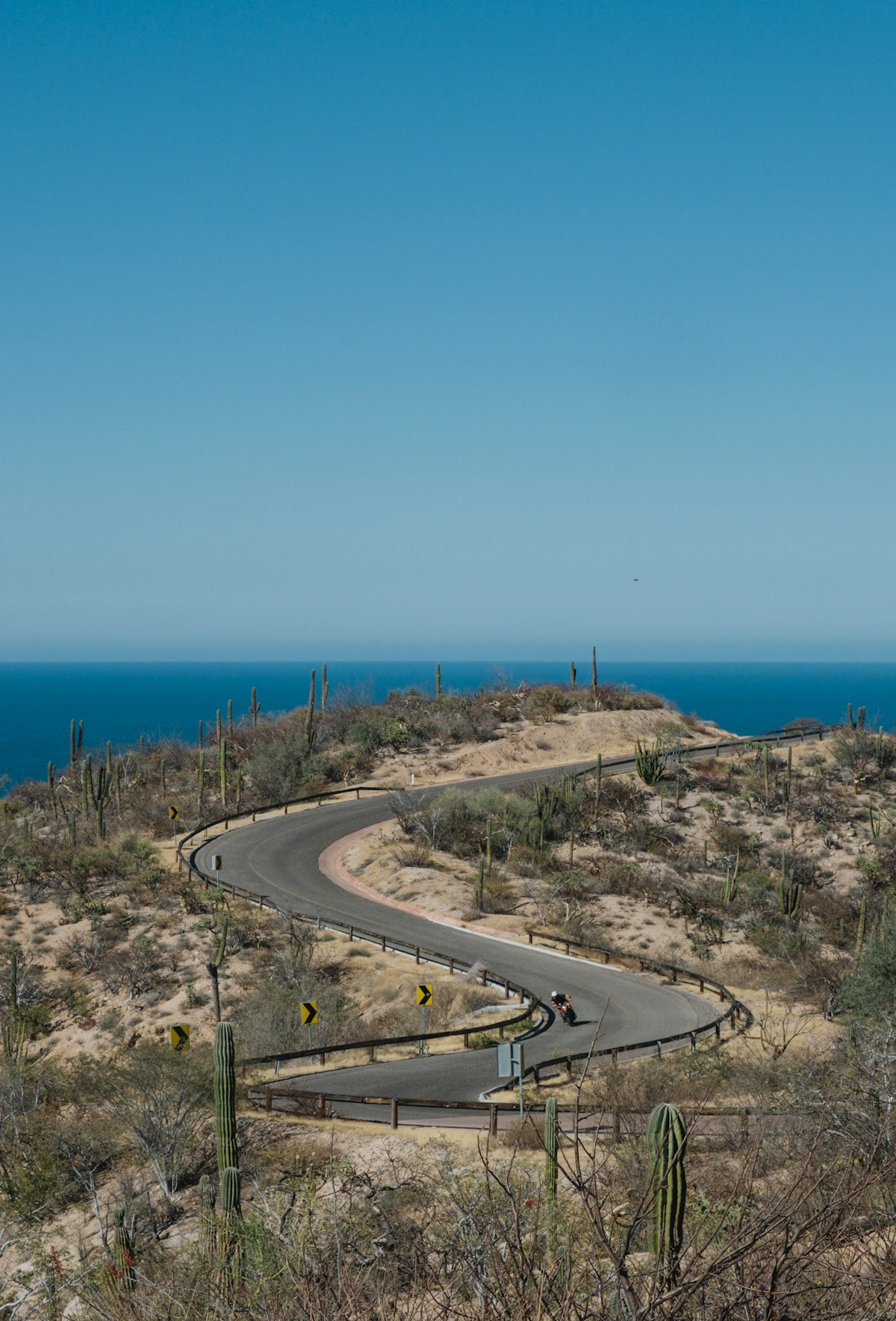
The approach to the rancho — west from Puerto Escondido, past the town of San José del Progreso, through the farmland and palm groves that give way to the lagoon — is worth paying attention to. You will notice the landscape changing as you get further from town. The light shifts. The road empties. By the time you turn off the highway, you are already somewhere different.
That shift is intentional. The distance is part of what keeps this place what it is.
When you are ready to plan your visit — or to think about something more than a visit — the visit page has the practical information, and making it yours covers what longer-term residency and land ownership look like. We are reachable at info@ranchodelasestrellas.com and are glad to answer questions that do not fit neatly into a guide.