If you type “yoga retreat Chacahua Oaxaca” into a search engine, you won’t find a long list of results. There is no curated wellness district here, no row of studios competing for five-star reviews, no menu of sound bath add-ons. What you will find is a single open-air shala sitting in a landscape of mangroves and lagoon water, surrounded by a national park that has been protecting this coastline for decades. That specific absence — the absence of the full apparatus — is exactly what makes this place work as a setting for practice.
I want to explain why, concretely and without the usual language that surrounds retreat marketing.
The shala itself
YogaMala’s shala is a large open palapa — 120 square meters, capacity for twenty practitioners, polished concrete floor underfoot, ceiling fans overhead. Three sides open to the outside. The fourth gives shelter from the occasional rain that comes in from the lagoon direction.
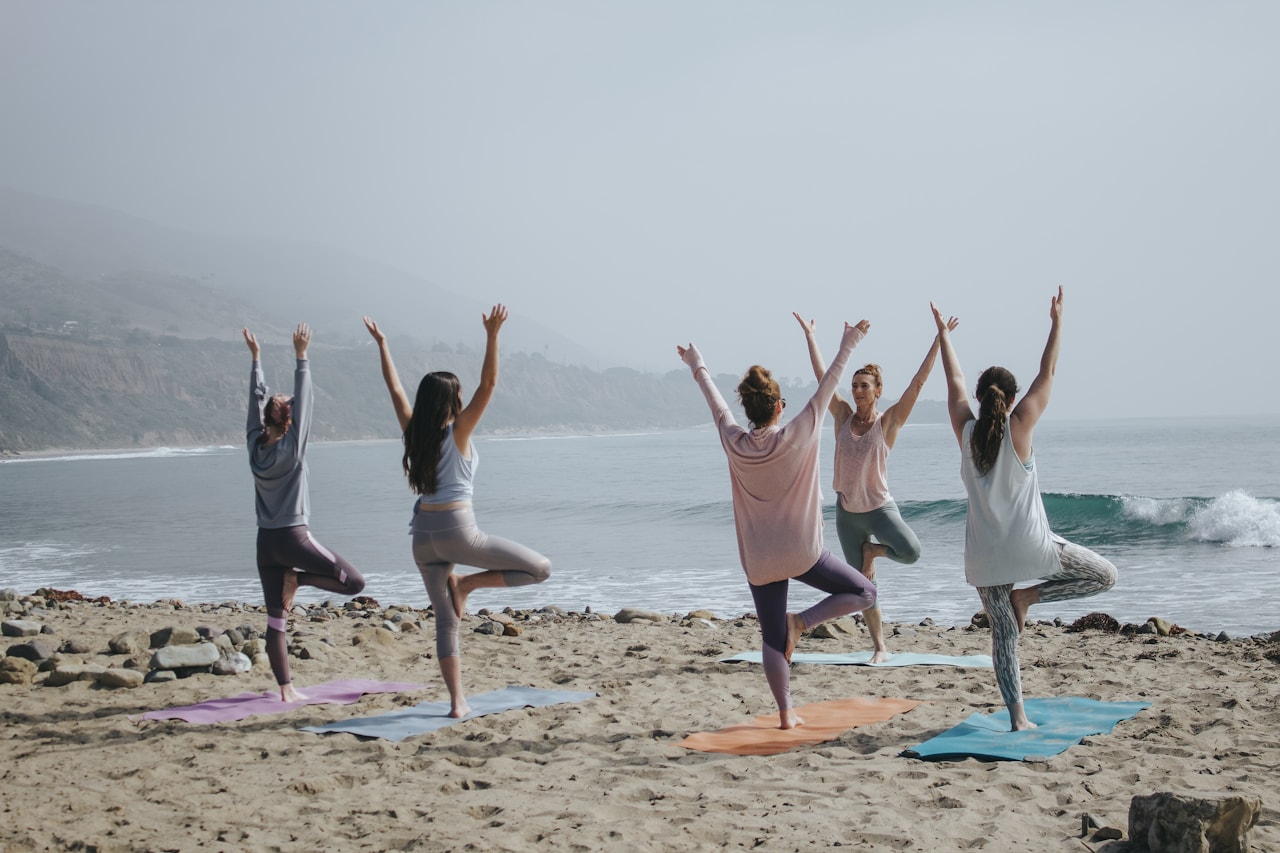
What “open-air” means here is not metaphorical. There is no glass, no air conditioning, no acoustic ceiling to separate you from the environment. You practice in the actual air — the same salt air that moves through the mangroves forty meters away, the same air the herons are breathing as they work the shallows. The temperature in the early morning is manageable; the fans do real work by mid-morning. By the time class ends you have been somewhere real, not somewhere simulated.
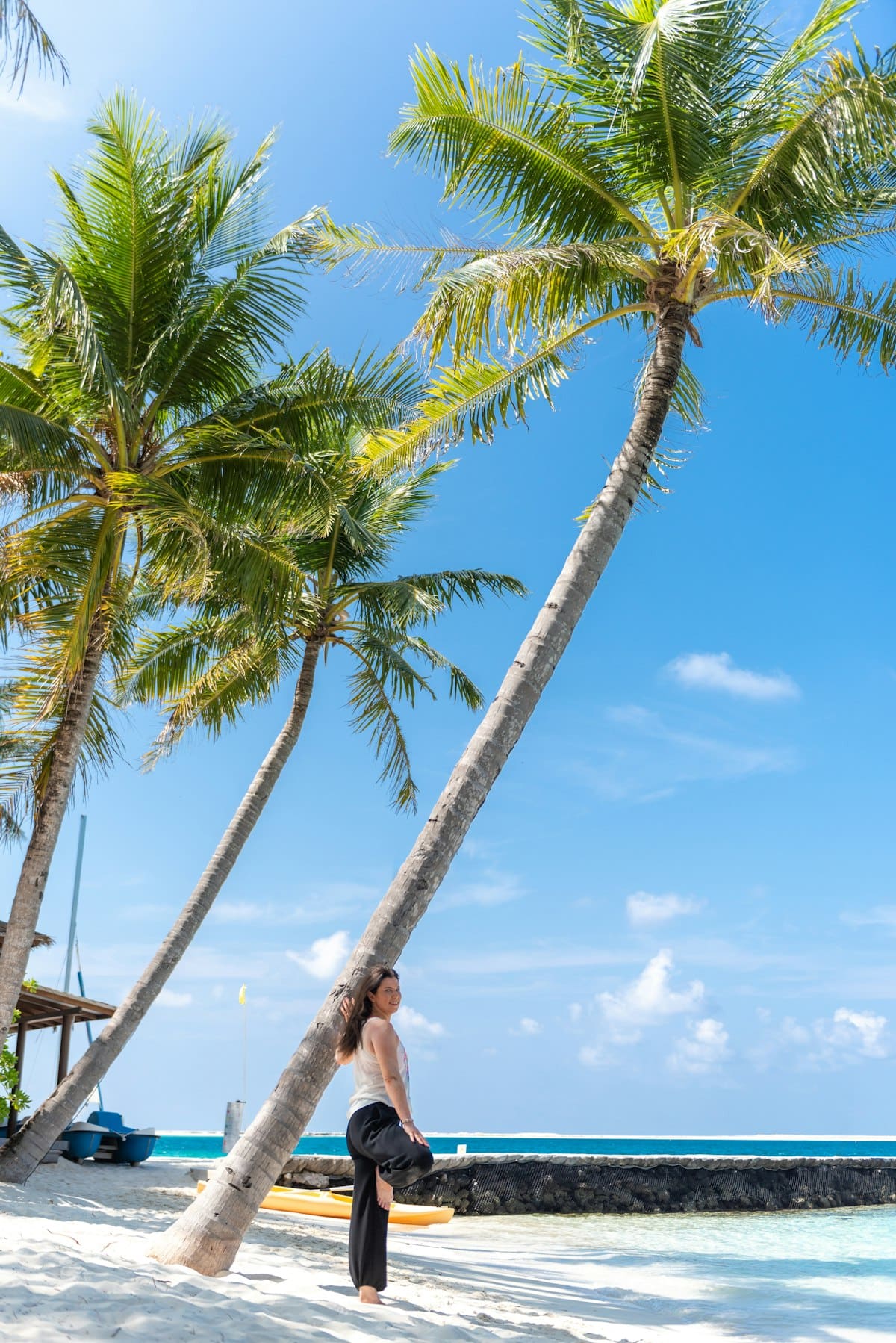
The floor matters too. Polished concrete is forgiving on the joints, cool underfoot in the early hours, easy to clean. Through the open sides you look toward the lagoon, and through the lagoon channel on clear mornings you can see the shape of the mountains beyond. None of this was accidental. The shala was placed where it was placed so that the practice faces outward.
What the senses actually receive
I have practiced in a lot of beautiful places. I want to be specific about what makes this one register differently, because “beautiful” is not a useful description on its own.
In the early morning, the lagoon is silver and nearly flat. The sounds are bird calls — ibis, spoonbills, herons, frigate birds passing high overhead. There is no traffic noise, no construction, no music from a neighboring business. The silence here has texture. It is the particular texture of a functioning ecosystem going about its own business, which is different from the designed silence of a studio.
The salt air has a slight weight to it. When you breathe it in during pranayama or during long holds, it feels substantive in a way that indoor air does not. I don’t know how to explain this in physiological terms. I only know that after an hour of morning practice in that air, the body knows where it is in a way it often doesn’t in rooms.
By the second or third day of a retreat, most people stop noticing the setting consciously and start being affected by it without noticing. That is the shift worth paying attention to.
Why the remoteness does real work
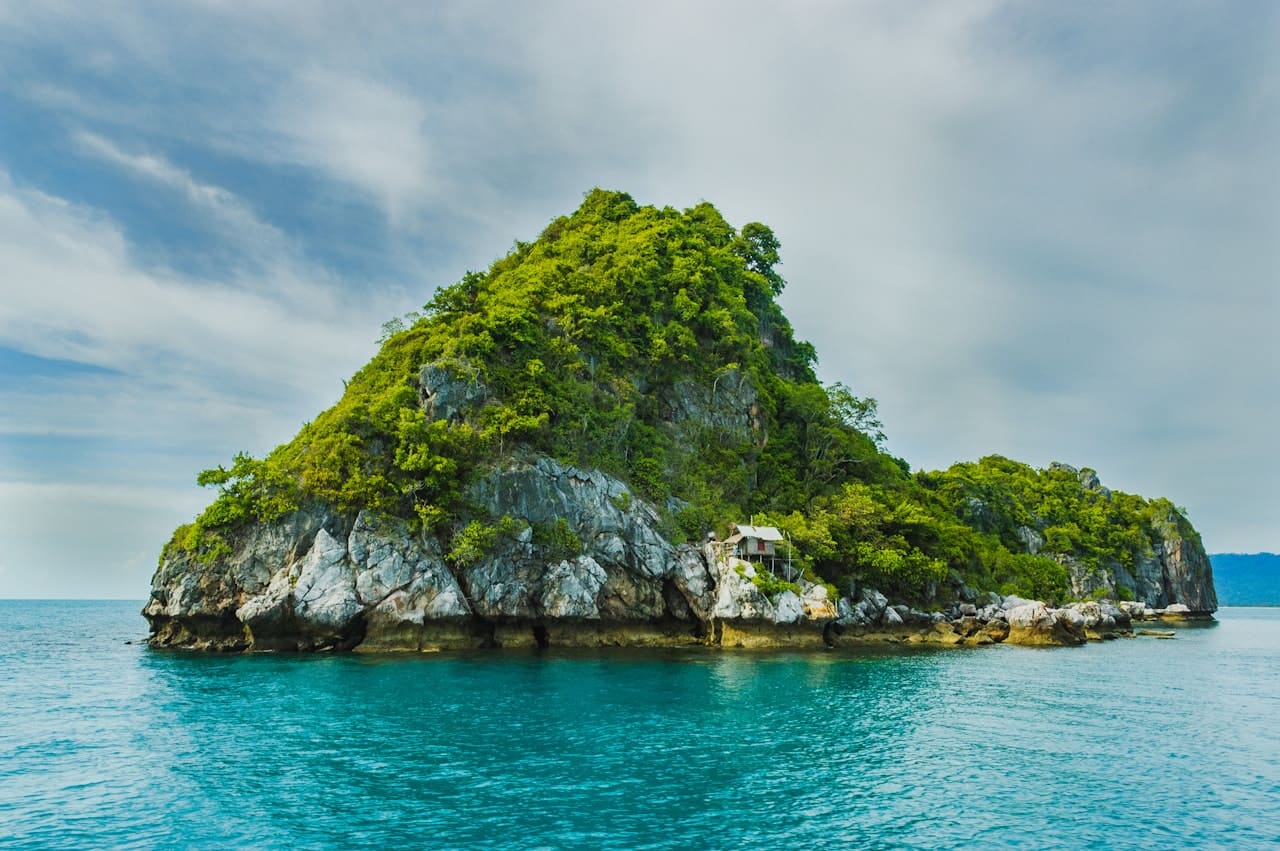
Getting to Chacahua requires some intention. You arrive via Puerto Escondido, transfer to Zapotalito, take a lancha across the lagoon. By the time you reach the Rancho you have already moved through several layers of transition, each one a little further from wherever you came from.
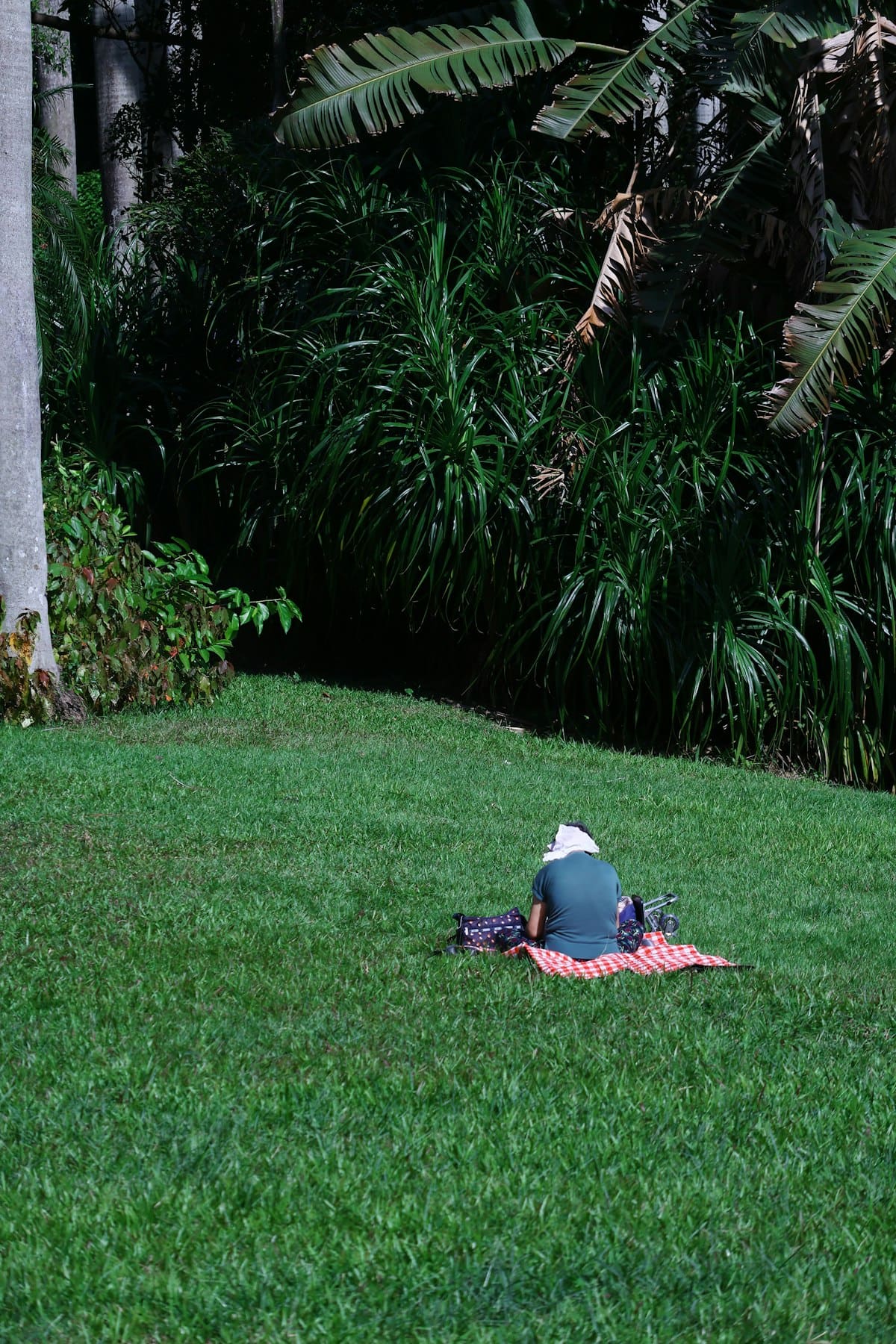
There is no reliable way to keep half your attention on your regular life while you’re here. The signal is inconsistent. The scroll does not load. The inbox becomes a future problem. What this means in practice — and I am describing something I have watched happen repeatedly — is that the nervous system, which normally spends enormous energy managing its connection to the constant feed, is forced to let go of that. Not immediately, and not without some resistance on the first day. But it happens.
This is not a selling point I’m inventing. It is a structural feature of the location. The disconnection is not a policy; it’s a consequence of geography. And it is the thing that makes the retreat actually function as a retreat rather than as a few yoga classes inserted into your regular mental life.
The Pacific is part of the program
Playa Chacahua is a thirty-minute boat ride from the Zapotalito pier. The lancha crosses the lagoon and you arrive at a long beach with a consistent Pacific shore break. In the afternoons, after the morning practice and the free midday hours, this is where many retreat participants spend their time.
The option to surf or swim is not incidental to the retreat structure — it is, I think, essential to it. The body needs different kinds of work across a day. An hour and a half of yoga opens and settles; the ocean agitates and empties in a completely different register. By early evening, after both, the body is tired in a way that is honest and productive. The sleep that follows is not like city sleep.
For those who don’t surf, the swim itself does the same work. The Pacific here is strong and cold and does not permit distraction. You come out knowing you’ve been somewhere.
After the water: a cold rinse, shade, simple food. The afternoon has a shape to it that the body learns quickly.
On food: simple, local, honest
The meals at the Rancho are not a wellness performance. There are no menus describing the healing properties of each ingredient, no activated charcoal, no gold leaf. There is fruit from the market, local eggs, corn tortillas from the village, fish when someone has fish, rice and beans when they don’t. The coffee is good. The agua fresca is cold.
Simple food in a hot climate, eaten after physical practice, does exactly what food is supposed to do. Nothing more is required of it.
What a retreat week looks like
Morning practice begins at six. Ninety minutes, usually — sun salutations while the sun is still below the horizon, then whatever the sequence of the week requires. Breakfast follows. The late morning is free: some people journal, some walk the land, some sleep. Lunch is light. The afternoon session at two covers breathwork, yin yoga, or whatever the day’s thematic material is. By four, people are making their way toward the lagoon or arranging the boat to the beach. Evenings are optional — meditation, restorative practice, or simply sitting and watching the sky do what it does over water at that hour.
By day three, most people have stopped fighting the pace. By day five, something in the nervous system genuinely settles. By the last morning, I often watch people move through their practice with a quality of attention that was not available to them when they arrived. Not because I taught them something miraculous. Because the place held still long enough for them to catch up to themselves.
An honest comparison
I don’t spend much time thinking about other retreat destinations, but I am aware of what the market looks like. In Tulum, and in the more developed wellness corridors of Puerto Vallarta and Sayulita, a retreat often arrives as a premium experience — expensive, staged, optimized for particular kinds of documentation. The aesthetic is cohesive. The food is beautiful. The practice is fine.
What is sometimes harder to find in those places is the quality of genuine remove — the sense that you have actually gone somewhere rather than rented a more expensive version of the stimulation you experience everywhere else. Not because the people running those retreats are doing something wrong. Because the infrastructure of wellness tourism creates a certain gravity that is difficult to escape once it’s established.
Chacahua does not have that infrastructure yet. The Rancho is young — founded in 2023, still building, still becoming what it will be. That is a drawback in some respects and a genuine feature in others. The practice happens here without the weight of a brand pressing down on it. You come, you practice, you go to the water, you sleep. The lagoon doesn’t know what Tulum is. Neither, for a week, do you.
If this is what you’re looking for
Details about current retreat offerings, the schedule, and the option to bring your own group to the shala are all at /yogamala. If you want to understand the setting more before you decide, the visit page gives an honest picture of what getting here and being here actually looks like. The place will speak more clearly than I can.