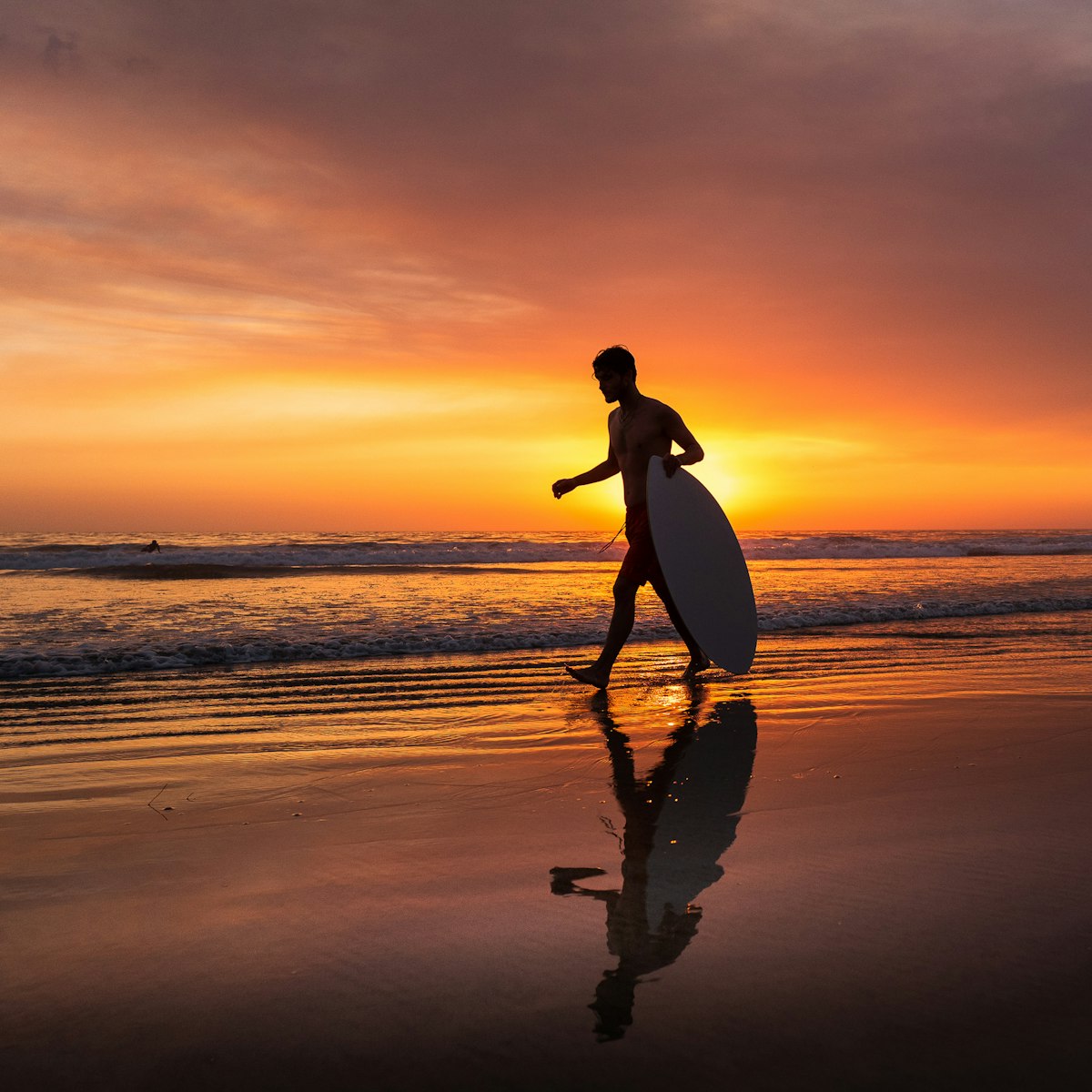
The surf yoga lifestyle in Oaxaca that people romanticize in magazine articles is not quite what I live. What I live is stranger, more specific, and in most ways better than the version I imagined before I arrived. I came to Rancho de las Estrellas for a two-week retreat. That was two years ago. I am still here, and I have been trying to understand why with more precision than “it’s beautiful” — because beautiful doesn’t keep you anywhere.
The morning, before the heat arrives
I wake before six. Not because anyone asks me to, and not from discipline exactly — the light starts doing something to the sky above the lagoon around that hour that I find impossible to sleep through once I know it’s happening. A particular quality of gray going pink going gold, the water surface catching it in a way that solid land doesn’t.
The shala is open on three sides. By the time I set my mat down the birds are already well into their morning business. I practice facing the lagoon and I will not pretend that doesn’t matter. It matters enormously. The practice has a different quality here than it had in the studios where I trained — not better in every technical sense, but less defended. There’s nothing to perform for and no mirror to perform at. The mangroves don’t care about your alignment. The herons are not impressed.
Mornings are mine, in the way that time rarely belongs to you in cities. Classes, when I teach them, happen after eight. Before that the practice is private. The salt air carries something — an actual physical quality on the skin that is hard to describe without sounding excessive. A slight resistance and then a kind of ease. After an hour of movement in that air my body knows exactly where it is. That clarity is not something I had found reliably before I came here.
The Pacific, thirty minutes by boat
In the afternoons, the Pacific is a thirty-minute boat ride from the Zapotalito pier. You take a lancha across the lagoon and the boat swings out into the estuary and then you’re at Playa Chacahua.
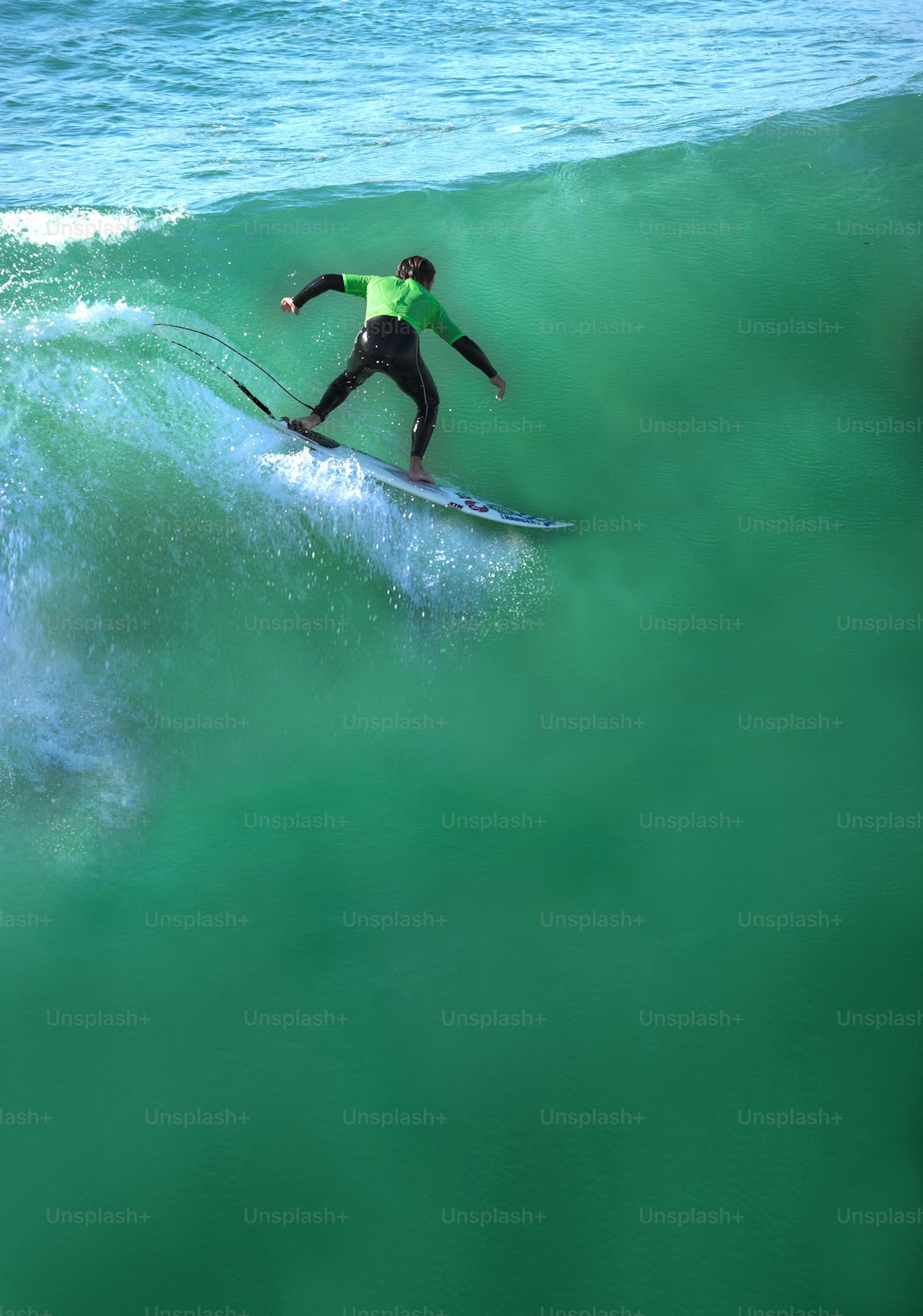
The surf is honest. I want to be careful about that word. It is not dramatic every day. There are flat periods. There are choppy afternoons when the wind comes in wrong and nothing stacks cleanly. But it is consistent in the way that matters for regular practice — there’s almost always something rideable if you’re willing to read it, and the crowd situation is not what you find at more well-known breaks along this coast. You can take a bad wave without someone on your shoulder. You can take a long time deciding whether to paddle and no one will be impatient with you.
I surf maybe four times a week. Some weeks more. There is a particular satisfaction in moving between practices in a single day — the internal, static, breath-led quality of the yoga morning, and then the external, reactive, entirely physical reality of reading a wave and responding to it. They sharpen each other in a way I find genuinely interesting from a body-knowledge perspective. The wave doesn’t wait for you to think. After a few months here I started noticing that the same quality — a faster translation from perception to movement — was showing up in my yoga practice too.
What it means to teach here
I lead retreats through YogaMala, the retreat program at the Rancho, and the teaching I do here is different from anything I did before. Not because the sequences are different, though some of them are. Because the environment strips away the context that usually gives teaching a certain performance quality.
In a city studio you are teaching inside a structure — a brand, a style, a community’s expectations of what a yoga class is supposed to be. Here, people arrive with fewer of those expectations and more genuine curiosity. They arrive a little tired from the journey, a little disoriented, a little more open than usual. The first morning practice on the shala often has a quality of surprise in it — surprise at how the body settles when the usual stimuli are absent.
What I try to teach here is attention. The place makes that easier. When you finish practice and look up at the lagoon and a roseate spoonbill happens to be standing in the shallows forty meters away, you don’t need me to explain what the practice is for.
What I miss
I want to be honest about this because it matters, and because anyone considering a life here should know what they’re trading.
I miss my city friends in a real and ongoing way. Not in the acute way of homesickness but in a low, persistent way — the ease of proximity, the way you can end up in the same place without planning it. Here, visits require logistics. People come deliberately or they don’t come.
I miss good coffee. The coffee I can get nearby is fine. The coffee I want requires either a trip to Puerto Escondido or bringing back a good bag from the city. I now plan my coffee supply the way I used to plan groceries, which is a reasonable adjustment but an adjustment nonetheless.
I miss reliable wifi. The internet situation here has improved since I arrived and is improving still, but it is not the always-on background presence I was used to. Sometimes this is a gift. Sometimes a call drops at the wrong moment and the gift is harder to appreciate.
What I don’t miss
The noise and speed of city life. I had lived with that baseline for so long that I couldn’t hear it until it was gone. The performance culture of yoga as it exists in a certain kind of studio ecosystem — the way the practice can become a product, the teacher a brand, the student a consumer. None of that apparatus is here. I don’t miss any of it.
The dissonance between what yoga teaches and the environment in which you’re practicing it. In a city studio, you can spend ninety minutes in a room designed to create stillness and then walk back out into conditions that require constant alertness and defense. Here, the practice and the place are continuous. The stillness is the same stillness.
Why Chacahua specifically
I have practiced and taught in beautiful places. This is not the most beautiful place I have been, if beauty is the only metric. What makes Chacahua specific is the lagoon system, which has a character unlike any coastline I have known.
The national park protection means that the surrounding landscape is genuinely stable. The mangroves are old. The bird populations are healthy. The fishing community that has been here for generations has kept the ecology more intact than you find in most places people call “unspoiled.” It is not unspoiled — no place is. But it is less compromised than almost anywhere I have been, and that quality is palpable. Your nervous system registers it without needing to be told.
There is also something about the particular combination of lagoon and ocean, the boat ride between them, that gives daily life a quality of transition I find nourishing. You cross from one water world to another. The daily rhythm has a punctuation to it that stops the days from running together.
If you want to understand before you decide
If you’re curious about the retreat programs I lead here, the YogaMala page has the current schedule and what to expect. And if you’re thinking about something more long-term — what it would actually look like to live or build here — the visit page is the honest starting place. Come and see it at a pace slow enough to know whether it wants you back.
I’m not trying to convince you. I’m trying to describe something accurately. The place will do the rest of the work, or it won’t.