After the first full cycle of sessions at Nandia — our nature-based education program at Rancho de las Estrellas, on the Pacific coast of Oaxaca near Lagunas de Chacahua National Park — I sat down to write notes on what had happened. I expected to record progress toward the goals I had set. Instead, I found myself writing mostly about what surprised me.
That felt like a good sign.
Nandia is still early. We are building the curriculum as we go, testing programming, adjusting based on what the children and the landscape are actually teaching us. What follows is an honest account of what we have learned so far — what worked, what surprised us, what needed adjustment, and where we are headed.
What worked immediately
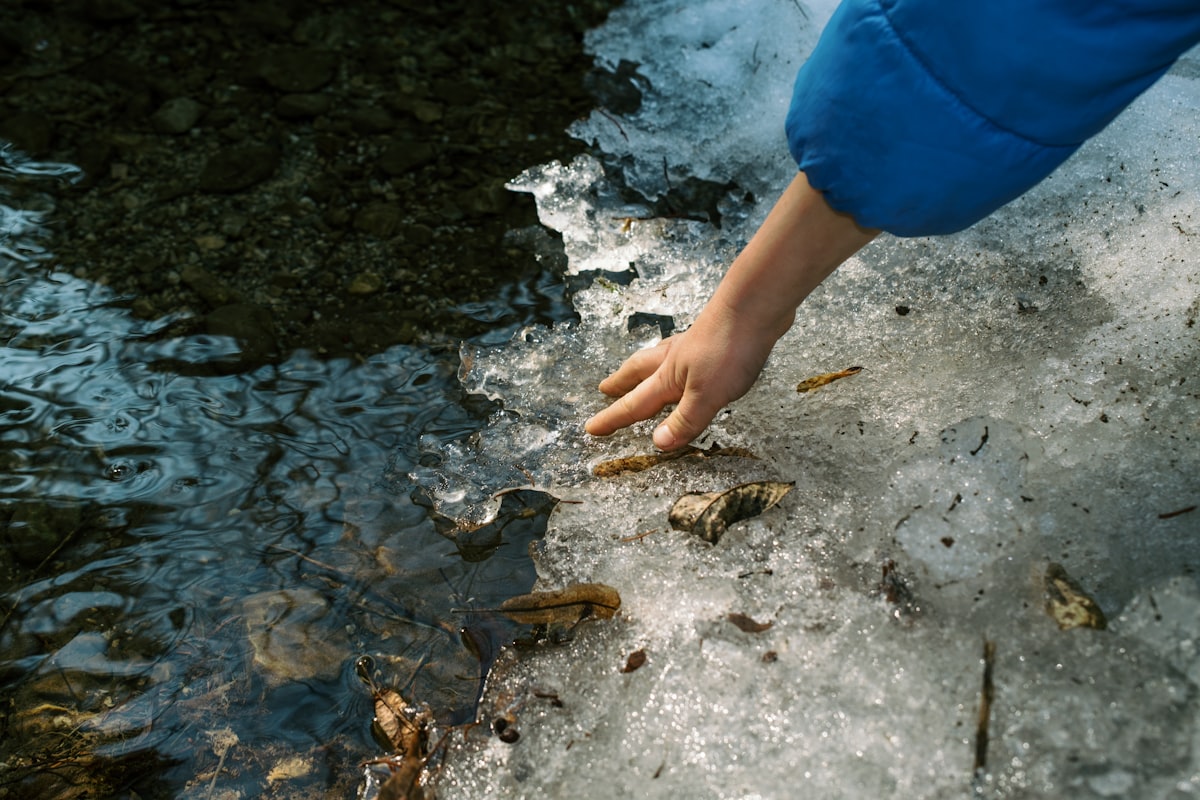
The most immediate and consistent thing I observed was attention. At the lagoon edge, children’s attention is qualitatively different from what I have seen in classroom settings. They watch for longer. They notice more. They ask questions that are harder to answer — not because they are more intellectually demanding, but because they come from genuine observation rather than from a cued prompt.

A child who sits beside a lagoon channel and watches for twenty minutes will notice things that no lesson plan would have directed them toward: the way a particular bird holds its head before it dives, the pattern of ripples that indicates fish movement below the surface, the color shift in the water at the boundary between freshwater inflow and the brackish channel. Those observations are the raw material of science, ecology, and eventually writing and mathematics. They do not require me to provide them. The landscape provides them. My job is to create the conditions for the observation and then to follow where it leads.
The planting and harvest rhythm created something I had hoped for but had not been certain about: a natural time structure that children internalized without being told to. When a planting day comes around, there is anticipation — not because I have assigned significance to it but because children understand, from experience, that something real is happening. The food forest at the Rancho provides this kind of meaningful punctuation to the week in ways that a bell schedule never has.
The language dimension also worked more naturally than I had planned. When Spanish-speaking and English-speaking children are in genuine contact every day — not in separate language instruction blocks but in shared activity, conversation, and play — language acquisition happens laterally. A child learns a word in a second language not because a teacher drilled it but because they needed it to communicate something they actually wanted to say. The switching is fluid and unselfconscious in a way that formal bilingual instruction rarely achieves.
What surprised us
The biggest surprise was how much the children already knew.
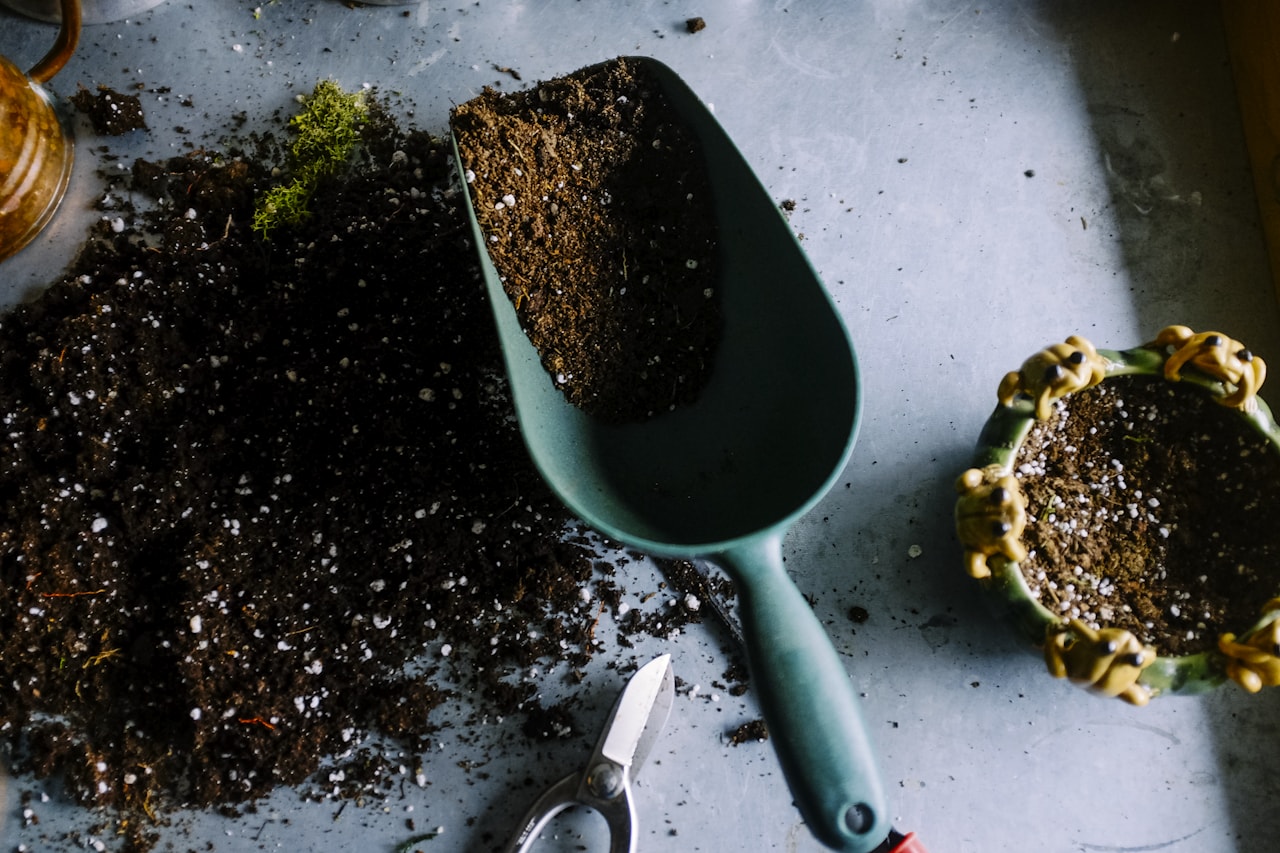
I had assumed that part of Nandia’s work would be introducing children to the local ecosystem — teaching them about the mangroves, the fish, the seasonal rhythms. What I found, especially with children from fishing families in Zapotalito, was that this knowledge was already there, often in considerable depth. A child whose father fishes the lagoon knows the names of a dozen fish species in their local idiom, knows which channels produce best at which tide, knows the signs that indicate a seasonal shift in the fish population. A child whose grandmother plants milpa knows more about companion planting and soil preparation than I would have gotten to in six months of curriculum.
This shifted how I think about Nandia’s job. We are not bringing ecological knowledge to children who lack it. We are, in many cases, receiving knowledge that children already carry, formalizing it, connecting it to wider frameworks, and honoring it as legitimate content rather than treating it as informal background to real education. That is a different posture. It means that the school serves as a place of consolidation and integration rather than primarily a place of transmission — and it requires the teachers to be learners first.
The second surprise was how quickly the children of non-local families adapted. International children who arrived without any relationship to the lagoon ecosystem became observant and curious faster than I expected. There is something about the scale and the immediacy of this environment — the fact that the ecology is undeniable, present, active — that engages children who might otherwise drift in a more interior setting. Boredom is harder to maintain at the edge of a mangrove channel when a great blue heron is standing five meters away.
What needed adjustment
The first sessions were too structured. I designed them with a lesson arc: introduction, observation activity, discussion, documentation. The lagoon does not cooperate with lesson arcs.
One morning in the early weeks, I had planned a session on water chemistry — how salinity varies through the system, what affects it, how to observe the gradient without instruments. We arrived at the site and found that an osprey had made a catch thirty meters from the bank. The children were motionless for fifteen minutes, watching. The osprey ate. The pelicans rearranged themselves. A crocodile, which none of us had noticed, submerged without ceremony.
My lesson plan was not what the morning was about. The osprey was what the morning was about.
Learning to follow the environment rather than impose a schedule on it is, I think, the central pedagogical skill required for this kind of teaching. It is not the same as having no plan. It means holding the plan lightly, knowing the conceptual territory well enough to connect whatever emerges to what you are trying to teach, and trusting that the landscape is generous enough to provide teaching material if you are paying attention.
This also required adjustment in how I communicate with families about what sessions will look like. The expectation of a legible curriculum with predictable weekly content is reasonable, and we work toward it. But some parents needed to understand that on a given day, the best mathematics lesson might turn out to be measuring the osprey’s wingspan through trigonometry, and the best science lesson might be the crocodile.
The bilingual dimension, more closely observed
I want to say something more specific about what the bilingual environment revealed.
Local children — those from Zapotalito and the surrounding area — approach English with a pragmatic orientation that is genuinely different from how it is typically approached in academic settings. For these children, English is the language of tourists, of the digital world, of economic access. They learn it for the same reason they might learn to fix an outboard motor: because it opens possibilities they want to have open. That pragmatic orientation makes them fast learners and unsentimental about mistakes. They try things. They adjust. They move on.
International children approach Spanish the same way. When Spanish is the language of your neighbors, your daily market, the fishing guide who takes you out on the lagoon — when it is functional rather than academic — acquisition accelerates. This is not a new observation in language education, but it is one that takes on particular texture when you watch it happen in a specific place with specific children.
The Zapotec dimension is slower to develop, and I want to be honest about that. We are introducing children to Zapotec vocabulary, to its presence in ceremony and in the names of places and species, to its continuing significance in the communities along this coast. We are not producing fluent speakers. What we are producing, I hope, is children who grow up understanding that this region has a linguistic depth that Spanish does not exhaust, and who carry enough respect for that depth to seek it out later if they choose to.
What year two looks like
The next phase of Nandia’s development involves three things that I think of as parallel tracks.
The first is curriculum integration: moving from programming that runs alongside the school day to a curriculum where the lagoon, the food forest, the seasonal calendar, and the community are structurally integrated into every subject. Mathematics through measurement and planting geometry. Science through systematic observation of the lagoon across seasons. Language arts through storytelling rooted in local ecology and history.
The second is formal partnerships with local families. The knowledge that fishing and farming families carry deserves to be part of the school in a structured way — not as occasional guest appearances but as ongoing collaboration. We are beginning conversations about how to make that happen.
The third is expanding the age range. Our current scope is children from roughly three to twelve. As the curriculum develops and the community grows, we expect to extend what we offer. What that looks like exactly is still taking shape.
For families interested in learning more about Nandia — whether you are living at Rancho de las Estrellas, considering it, or living nearby in Zapotalito or the surrounding area — the Nandia page is where we are collecting expressions of interest and sharing updates as the school develops. We read every message and we are genuinely shaped by the conversations we have with families.
The lagoon keeps teaching. We are getting better at listening.