The first thing I want to explain about Nandia — our Waldorf-inspired, nature-based school here at Rancho de las Estrellas — is the name. It does not come from a European educational tradition or from a theory. It comes from this place. Nandia is a word in the regional Zapotec language meaning water, the living kind, the kind that moves and sustains. We chose it because it tells you something true about what we are trying to build: a school that is rooted here, that draws its language and its reference points from the Pacific coast of Oaxaca and not from somewhere else.
I grew up in this region. I know what the lagoon looks like in January when the water is cold and the herons are stacked along the mangrove edge, and what it looks like in September when the rains have saturated the soil and the air smells like decomposition and new growth at the same time. I know the names of things — the birds, the fish, the plants — in Spanish, in the idiom of coastal Oaxaca, and in some cases in Zapotec. That knowledge was never systematized for me in a classroom. It was given to me over time, by the place and by the people in it. Nandia is, in part, an attempt to give that kind of knowledge to children deliberately, without waiting for it to happen by accident.
What Waldorf-inspired means here
Nandia draws on the Waldorf tradition in specific ways, and departs from it in others. The core principles that guide us: learning is organized around developmental readiness rather than standardized benchmarks. Children at different ages are genuinely different — not just in what they know but in how they come to know things — and the approach to a seven-year-old and a ten-year-old should reflect that. Arts and movement are woven into every subject, not separated out as enrichment or reward. Mathematics has rhythm and gesture. Language has story and image. Science has its roots in wonder before it has its roots in data.
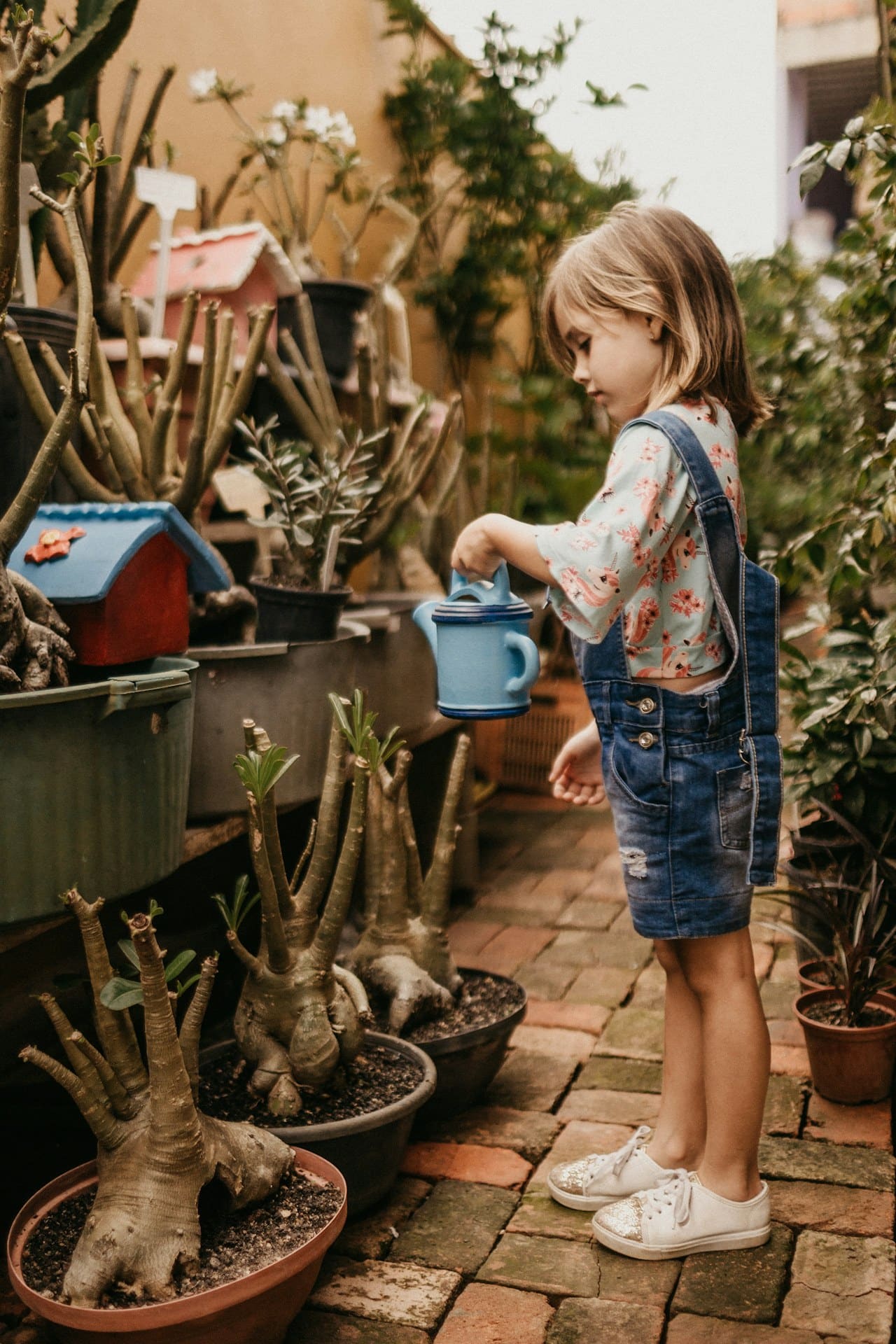
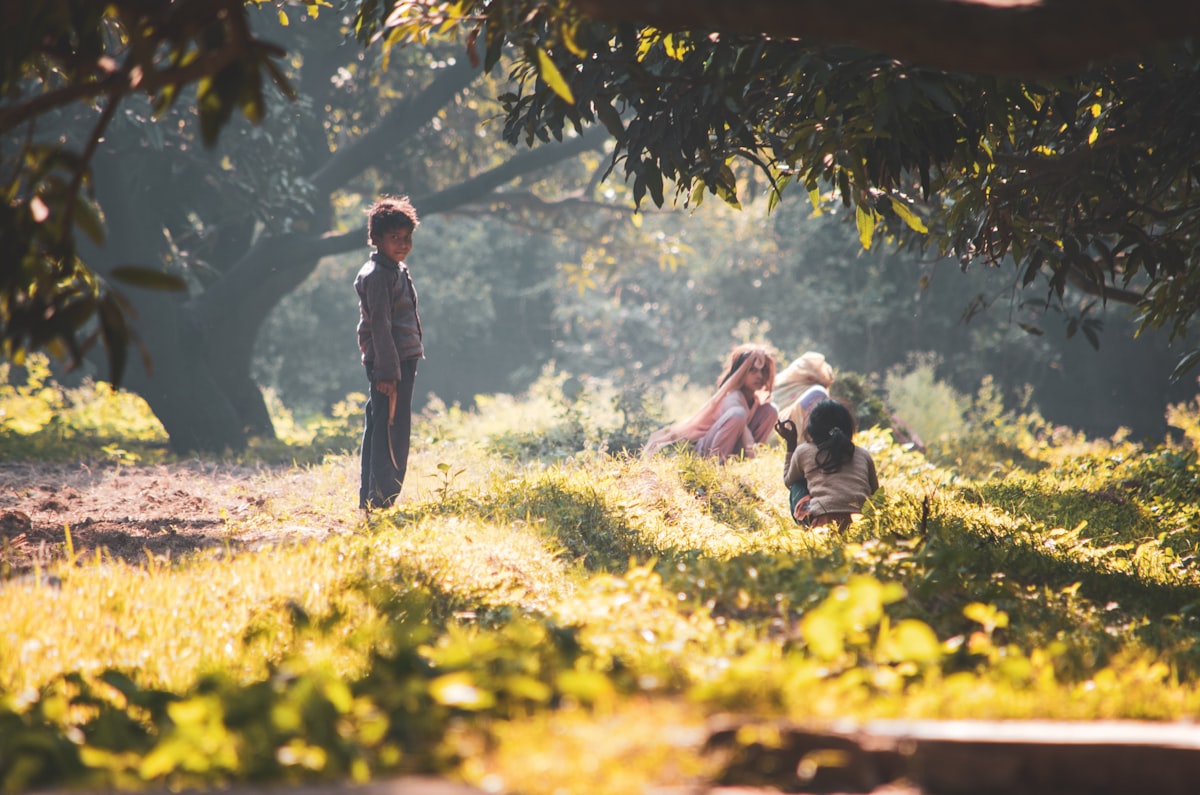
We use morning circles, seasonal celebrations, and the weekly rhythm of the farming and tidal calendar to give children a felt sense of time and season that most schools never provide. There is no standardized testing at Nandia. Assessment is continuous, relational, and observational — a teacher watching a child at the lagoon edge learns more about that child’s capacity for sustained attention than any written exam.
What we do not do is apply a European template to a Oaxacan context. Waldorf pedagogy was developed in Stuttgart in 1919, by people thinking about a specific set of children in a specific historical moment. Some of what Rudolf Steiner observed about child development is genuinely useful. Some of it needs to be questioned, adapted, or set aside when you are teaching children who are being raised on a fishing lagoon in southern Mexico. We call ourselves Waldorf-inspired rather than Waldorf-accredited because the distinction is honest: we take what serves this place and leave what doesn’t.
The lagoon as classroom
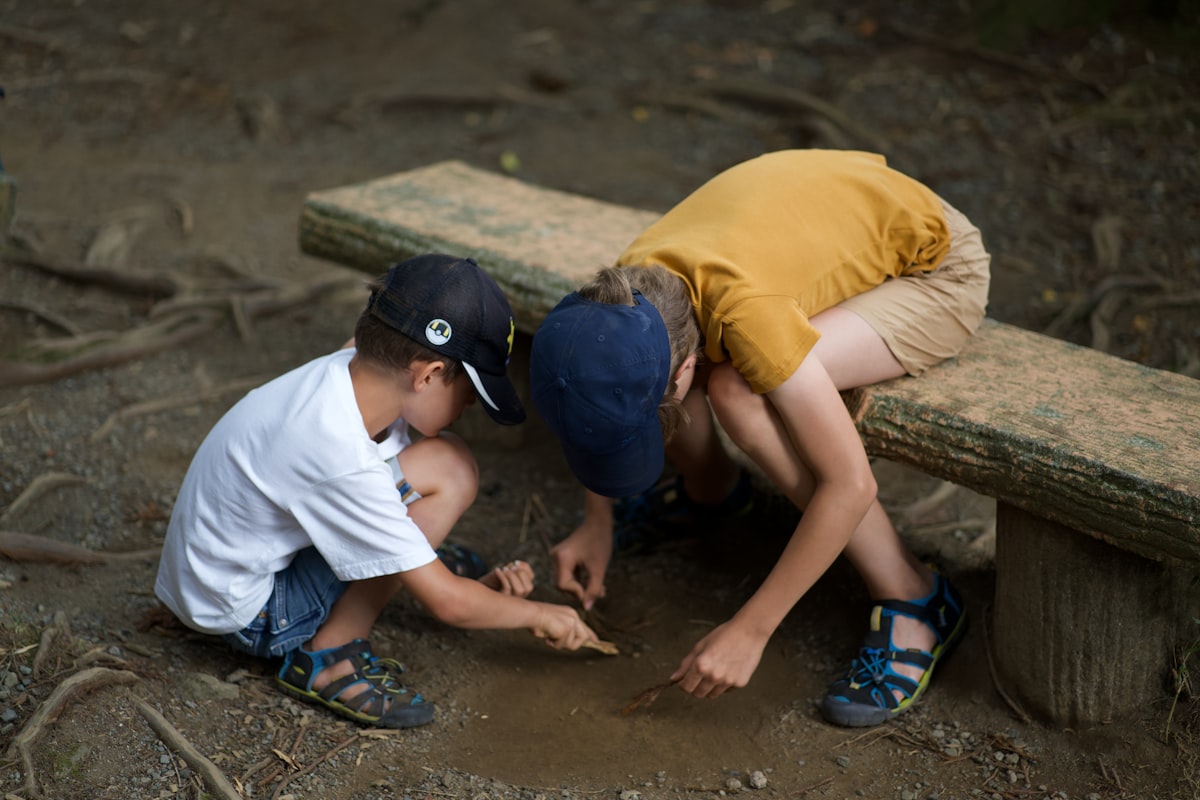
When I say nature-based education, I mean something specific — not a metaphor about getting children outside, but a structural commitment to using the ecosystem as a primary teaching site. The Lagunas de Chacahua system, which borders the property and extends through the national park, is one of the most ecologically complex environments on this coast. It is also, for our purposes, a living textbook.
Water cycles are not abstract at the lagoon edge. Children can watch evaporation from the surface, feel the humidity shift, trace the rain back into the wetlands, observe the salinity gradient between the freshwater inflow and the brackish channels. Biology is the fishing family that wades the shallows at dawn, the mangrove root system that nurses juvenile fish and shrimp, the roseate spoonbills that appear without warning in late afternoon. Tide observation is mathematics: time, interval, prediction, pattern.
The food forest that has been developing at the Rancho is a second classroom. Planting cycles, soil composition, companion planting, harvest timing — these are agricultural science, and they are also the basis of how this community eats and organizes its time. The sky at night here is genuinely dark. Astronomy at Nandia does not mean a diagram in a textbook; it means lying on your back in the grass and learning the constellations by name, then watching them move through the season.
The village of Zapotalito, which sits at the edge of the property, is the social studies classroom. The Zapotec communities along this coast have a presence here that is older and more layered than anything we are building. Nandia’s relationship with Zapotalito is outward-facing: we want children to know their neighbors, to understand the fishing economy, to participate in regional traditions and ceremonies rather than observe them from a distance. For children raised at the Rancho, this is not a field trip. It is their community.
Three languages, one daily life
Nandia is a multilingual school. Spanish is the primary language of instruction — this is Oaxaca, and Spanish is the shared language of the broader community. English is present as a living language, not as a subject studied at a remove. When Spanish-speaking and English-speaking children are in the same space every day, language acquisition happens the way it is supposed to: through use, through need, through relationship.
We also take seriously the presence of Zapotec in this region. Children at Nandia are not expected to become fluent speakers, but they learn the names of things in the local language, encounter it in ceremony and in community life, and grow up understanding that this coast has a linguistic history that is not Spanish and not English. That orientation matters. It shapes how children relate to where they are from.
Who Nandia is for
At present, Nandia serves children from roughly three to twelve years old — early childhood through the equivalent of upper primary. We are a small school, still in early development, and we are honest about that. The curriculum is being built. The programming is being tested. We are not yet accepting general enrollment, but we are accepting expressions of interest from families, and those conversations are shaping how we grow.
The school is intended primarily for families living at or near Rancho de las Estrellas, but our long-term intention is to extend what we are building to the broader community — including Zapotalito and the surrounding area. A school that serves only the families of an intentional community is a smaller project than I want to build. The goal is something with deeper roots and wider reach.
My own background is in community development and education, shaped by years of working in this region. I have watched what happens when schools here try to prepare children for an urban professional future they may or may not want — and what gets lost in that process. The ecological knowledge, the cultural continuity, the relationship to the land. Nandia is not trying to trap children in a local past. It is trying to give them a real foundation in where they come from, so they can make genuine choices about where they go.
What we are still figuring out
I want to be straightforward about the fact that we are early. The physical school space is developing alongside the curriculum. Some of what I have described here is fully in practice; some of it is directional. The seasonal celebrations and morning circles are running. The lagoon work is happening. The food forest integration is underway. The formal bilingual curriculum structure is still taking shape.
What I can say with confidence is that the instinct that produced Nandia — the belief that children who grow up knowing where their food comes from, what the tide does, and who their neighbors are will be more capable and more whole than children who don’t — that instinct has been confirmed by everything we have tried so far. The lagoon teaches in ways I could not have scripted in advance.
If you are a family living at or considering Rancho de las Estrellas, or if you are simply curious about what we are building here, the best next step is to visit the Nandia page and send us an expression of interest. We are listening carefully to the families who reach out, and those conversations are directly shaping what the school becomes.