Before almost every visit to Rancho de las Estrellas, I have a version of the same conversation. Someone has found their way to the site, done some reading, felt some pull toward what we’re building — and then the questions start arriving. The FAQ for buying land in Oaxaca or joining an eco-community in Mexico is not well-covered online, at least not honestly. Most of what you’ll find is either promotional or outdated.
These are the fifteen questions I hear most, answered as plainly as I can.
1. Is it safe?
Yes. The area around Chacahua and Zapotalito is a fishing community, not a tourist hub. It has none of the dynamics that generate the security concerns associated with some other parts of Mexico. The people who live here have been here for generations, working the lagoon. They are not accustomed to disorder in their community and have no interest in it.
Oaxaca as a state has a different security profile than the regions that tend to dominate international news about Mexico. This is worth researching with current, specific sources rather than generalizing from national headlines. We’ve been on this land since 2023 and have not experienced security incidents.
2. How do I get there?
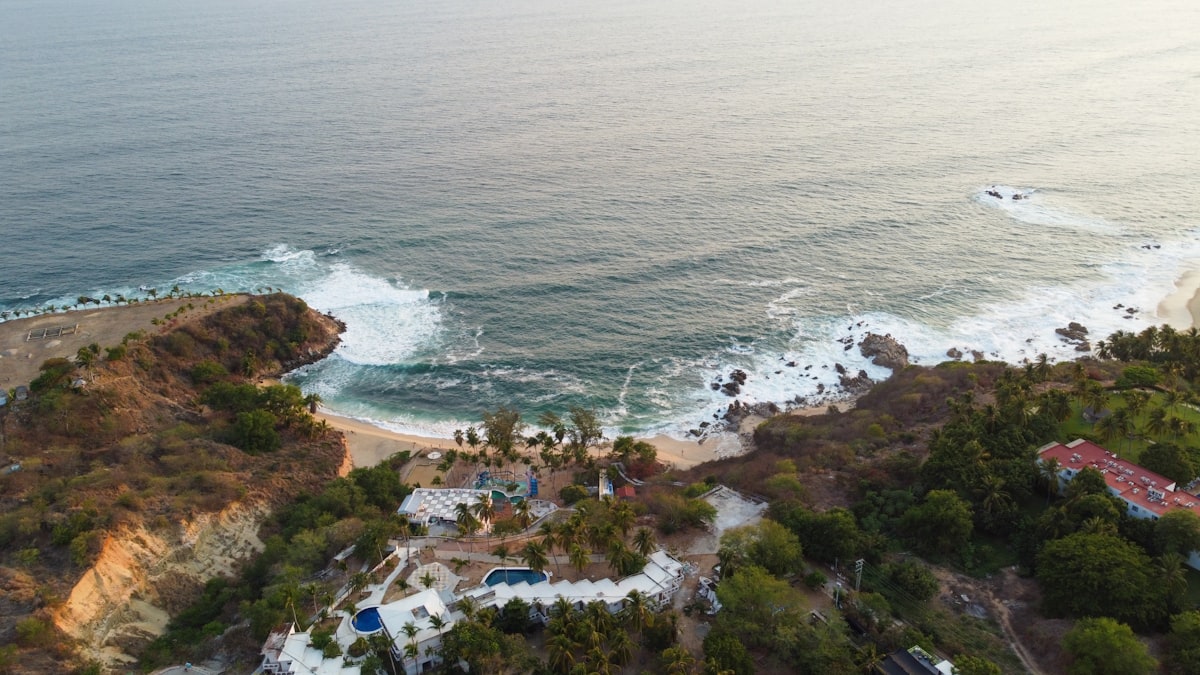
Rancho de las Estrellas is 58 kilometers from Puerto Escondido, which has its own international airport (PXM) with direct connections to Mexico City and seasonal flights from the US and Canada. The drive from Puerto Escondido takes roughly an hour on Highway 200.
From the road, you reach the Zapotalito embarcadero, where a lancha (small boat) takes you across the lagoon to Playa Chacahua. The boat ride is around fifteen minutes and is part of what defines the place — that brief crossing sets a different pace for whatever comes after it.
3. What does a visit cost?
Nothing. Visits to the Rancho are by appointment and free of charge. We’re not running a commercial experience; we’re inviting people to see what we’re building and decide for themselves whether they want to be part of it.
To arrange a visit, use the visit page or contact us directly at info@ranchodelasestrellas.com or +52 954 136 7919.
4. Can I camp or stay overnight?
Currently, most visits are structured as day visits. We have limited capacity for overnight stays at this stage of development. This is changing as the community grows — if you have a specific need for an overnight arrangement, write us directly and we’ll see what’s possible. Nearby accommodations exist in the Chacahua area and in Puerto Escondido for those who want to spend multiple days exploring before deciding anything.
5. How much does a lot cost?
Lot pricing depends on size and location within the property. We start at 450 square meters. Rather than publish a single number that may be out of date by the time you read it, we ask that you reach out directly — either through the make it yours page or by contacting us at info@ranchodelasestrellas.com. We’ll give you current, specific information for the lots that are actually available.

What I can tell you is that lots include water and electricity infrastructure — those are not additional costs to negotiate separately.
6. Can foreigners really own land here?
Yes, and this is perhaps the most frequently misunderstood question we get. Foreign nationals can own coastal property in Mexico through a legal structure called a fideicomiso — a bank trust in which a Mexican bank holds the legal title on your behalf as trustee, while you hold all beneficial rights: the right to build, to live, to lease, to sell, to pass the property to heirs.
This is not a workaround or a loophole. It is the established, federally recognized mechanism for foreign ownership in Mexico’s coastal restricted zone. Tens of thousands of foreigners own coastal Mexican property this way. The structure has been in place for decades and is well understood by Mexican notarios and banks. If you want more detail on how this works, I’ve written a dedicated post about it in the journal.
7. Is there internet?
Yes. It is improving. When we arrived in 2023 the connectivity situation required patience. At this point we have working internet sufficient for most remote work needs, though I would not describe it as urban-grade. Cellular coverage exists — Telcel has the best coverage in this area. If you are planning to run a bandwidth-intensive business from here, come and test it before committing to anything.
8. What’s the weather like?
Hot and tropical. The rainy season runs roughly May through October. The dry season, November through April, is the period most visitors prefer — temperatures are warm without being overwhelming, the sky is clear most days, and the landscape is at its greenest from the end of the rains. Humidity is present year-round, which is part of the character of the place, not a problem to be solved.
Summer months are hotter and wetter, and the surf during rainy season has a different character. It is a full year’s place, but if you’re planning a first visit, November through March is when the conditions are at their most welcoming.
9. Can I rent my land out?
Yes. As a beneficiary of a fideicomiso trust, you hold all economic rights to the property, including the right to lease it. If you build a structure you’re not occupying full-time, renting it is a realistic option. We can speak to how other owners in the community are thinking about this when you visit.
10. Is there a community of other owners?
Yes, and it’s growing. Current lot owners come from several countries. The community is still young — we founded the Rancho in 2023 — which means you’d be arriving early rather than into something fully formed. Some people find that appealing; others would prefer a more established community. The vision page describes how we think about what this community is becoming.
11. Do I need to speak Spanish?
It helps. The team is bilingual — you can navigate every aspect of the buying process and life here in English. But you will have a better experience of the broader community, of the fishing village, and of daily life in Mexico generally if you have at least basic Spanish. It’s also a courtesy to the people who live here.

If you’re considering this place seriously and don’t yet speak Spanish, I would not let that be the deciding factor. I would add it to the list of things to learn alongside the move, not before it.
12. What utilities are included?
Water and electricity are included with every lot. You don’t need to negotiate or build separate infrastructure for the basics. When you build, you connect to the existing systems. This is part of what distinguishes the lots here from raw land in more undeveloped areas — the utility infrastructure is already in place.
13. What can I build?
Structures are limited to two stories. We strongly encourage natural and sustainable materials — the design philosophy here is aligned with the ecology of the place, which means we’re not interested in seeing concrete towers go up on lots where they would be functionally and aesthetically out of place. More detail on building guidelines and what’s possible is on the build page.
The Rancho’s overall design keeps 70% of the land as open, undeveloped green space. Whatever you build exists within that framework — which means your lot will always have breathing room around it.
14. Is there a school?
Nandia, the nature school we’re developing, is currently in the planning and early development phase. It is designed as an alternative education option for families who want their children’s learning to happen in relationship with the natural environment — the lagoon, the national park, the food forest. It is part of the long-term vision for the community, not yet a functioning school.
If you’re considering this place with children and education is a key question, visit the Nandia page and reach out to discuss where things stand. We’re transparent about what exists and what is still becoming.
15. Why choose this over Puerto Escondido real estate?
Puerto Escondido is a real city with airport, hospitals, restaurants, surf schools, and infrastructure. If what you want is a residential property close to existing amenities, Puerto Escondido has a real estate market worth looking at.
What we offer is different. Rancho de las Estrellas is an intentional eco-community with an explicit commitment to keeping the ecology intact, maintaining aligned neighbors, and building something with a coherent purpose over time. The land is propiedad privada — privately titled — which is not always the case in rural coastal Oaxaca, where ejido land dominates and title clarity can be complicated. The neighbors here are not random buyers drawn by price; they are people who share a set of values about how to live in a place like this.
The Lagunas de Chacahua National Park is at the boundary of the property. That protection is not replicated in Puerto Escondido’s real estate market. If what you want is a community of people committed to something specific, in a landscape that is genuinely protected, with clean title and full legal ownership — that is not what you find by searching real estate listings in Puerto Escondido.
If you have a question I haven’t covered here, write us at info@ranchodelasestrellas.com or call +52 954 136 7919. If you’re ready to move from questions to actually seeing the land, the visit page is where to start.