People ask what a YogaMala retreat day looks like, and I try to answer specifically rather than with the language retreat brochures tend to use — words like “spacious” and “held” that mean something but have been repeated until they mean almost nothing. So here is the actual day, hour by hour, with the parts that don’t photograph well included.
5:45am — Before the heat
The lagoon is silver at this hour. The light hasn’t committed yet — it’s neither dark nor dawn, a particular kind of gray that lasts about twenty minutes before the sky makes up its mind. In that window the water surface is flat and reflective in a way it won’t be again until after sunset.
I wake without an alarm, or with one set as a backup that I almost never need. Something about the quality of light at the mangrove edge starts pulling at the edges of sleep before the hour arrives.
6:00am — Morning practice
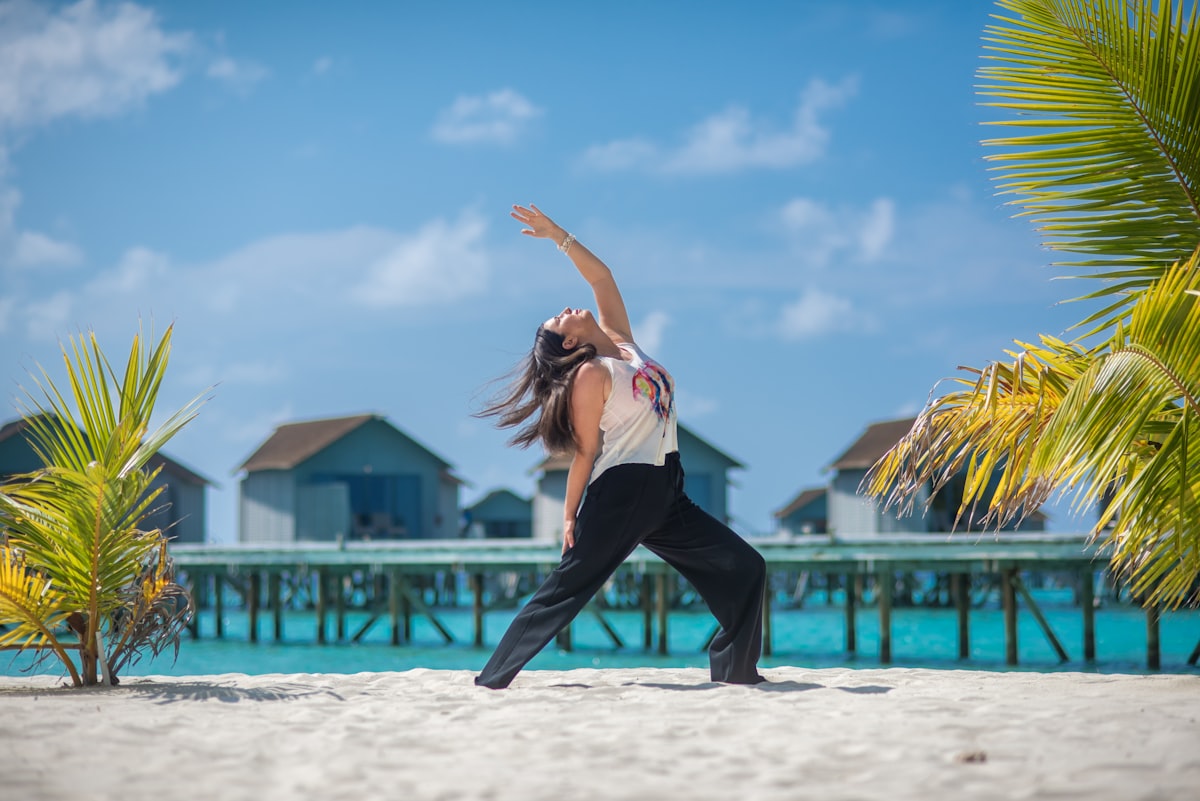
The shala runs ninety minutes, sometimes a few minutes longer. We start before the sun is fully up — sun salutations before the sun itself is present, which is intentional. There is something about warming the body in advance of the heat arriving that sets the practice on the right foot.
The shala is open on three sides. At six in the morning the air is still cool enough to need the movement and warm enough not to need layers. The ceiling fans run low. By the time we’re forty minutes in, the birds have shifted from their pre-dawn calls to the full mid-morning sound and the lagoon color has gone from silver to green-gold.
I don’t play music during practice here. I tried it in the early months and the birds made it feel redundant. What comes through the open sides of the shala — ibis calls, water sounds, the occasional splash from the mangrove edge — is not a distraction. It is the practice’s actual environment, and working with it rather than over it changes the quality of attention available.
The sequences vary by day and by where we are in the week. The first morning is usually a long, slow opening — I want to know where people are arriving from, physically. Not just which muscles are tight but which parts of the body have been holding something they haven’t had a chance to put down yet. By the third or fourth morning, when the nervous system has begun to slow, the practice can go deeper.
7:30am — Breakfast
Simple: fruit, local eggs, corn tortillas, coffee. The fruit is whatever came from the market that week — mango, papaya, banana, sometimes watermelon. The eggs are from the village. The tortillas are made by hand and arrive warm and uneven.
The coffee is good. This matters to me more than I’m willing to pretend it doesn’t.
Breakfast is not structured. People sit together or alone, eat slowly or quickly, talk or don’t. The absence of an agenda for the next ninety minutes produces a particular quality of conversation — unhurried, following its own direction. Some of the best exchanges I’ve witnessed here happened over breakfast on a slow morning, two people comparing notes on what their bodies did during practice without any reason to perform insight.
8:30am–12:00pm — Free
No schedule. This is not filler time; it is part of the design.
Some people journal. Some walk the land — the Rancho covers fifty hectares, and much of it is accessible on foot, the food forest in one direction, the lagoon edge in another. Some go back to sleep. A few sit on their porch and do exactly nothing, which is harder than it sounds and worth the effort.
The temptation on day one is to fill this time. By day three, most people have stopped fighting the openness of it and started using it the way the body needs to use rest — not as absence of activity but as actual recovery. The nervous system needs unstructured time to process what the practice has opened. Scheduling every hour works against that.
What the land itself does during these hours is worth noting. The Rancho’s fifty hectares sit within the boundary influence of the national park. The wildlife doesn’t observe retreat hours. You might encounter a coati on the path, or stand for a few minutes watching a flock work the shallows in the middle distance. The land is doing its own thing, and you are a temporary visitor to it.
12:30pm — Lunch
Light. In a climate like this, midday is not the hour for a heavy plate. The body at peak heat wants something simple — vegetable broth, a small rice dish, fresh fruit, something cold to drink. The appetite adjusts within a few days; most people arrive expecting to eat more than the environment calls for.
The siesta logic is real. After lunch and before the afternoon session, an hour of rest in the shade is not laziness. It is intelligent adjustment to the climate. I usually sleep, or try to.
2:00pm — Afternoon session
The afternoon session is where the week’s thematic material lives. Mornings are physical, orienting the body. Afternoons go further in: breathwork, yin yoga, yoga nidra, theory, or a combination.
Breathwork does something different in this environment than I’ve experienced teaching it elsewhere. The quality of attention available after a morning practice and a midday rest is not the same as what’s available at the end of a city workday. People arrive at the afternoon session already partway into a different state — quieter, more permeable. The breathwork can go where it’s supposed to go rather than spending the first thirty minutes trying to get there.
Yin holds in the afternoon heat, with the lagoon audible through the shala openings — this is one of the places where the practice and the setting most clearly amplify each other. The body releases because everything in the environment is already asking it to.

4:30pm — Free again
This is when people often go to the lagoon or arrange a boat to Playa Chacahua. The beach is a thirty-minute lancha ride from the Zapotalito pier — you cross the lagoon, the boat swings into the estuary, and you arrive at a long Pacific shore with honest surf and cold water.
The option to surf or swim after two practices is not incidental. It finishes the physical work of the day in a completely different register. The ocean asks something from the body that yoga and breathwork don’t ask — reactive, external, entirely committed. You come out of the water spent in a way that the mat never quite delivers, and the combination by early evening produces a quality of tired that is clean and satisfying.
Some people don’t go to the beach. Some spend this time reading, or talking, or continuing to walk the land. The afternoon freedom is genuinely free — there is no correct use of it.
6:30pm — Sunset
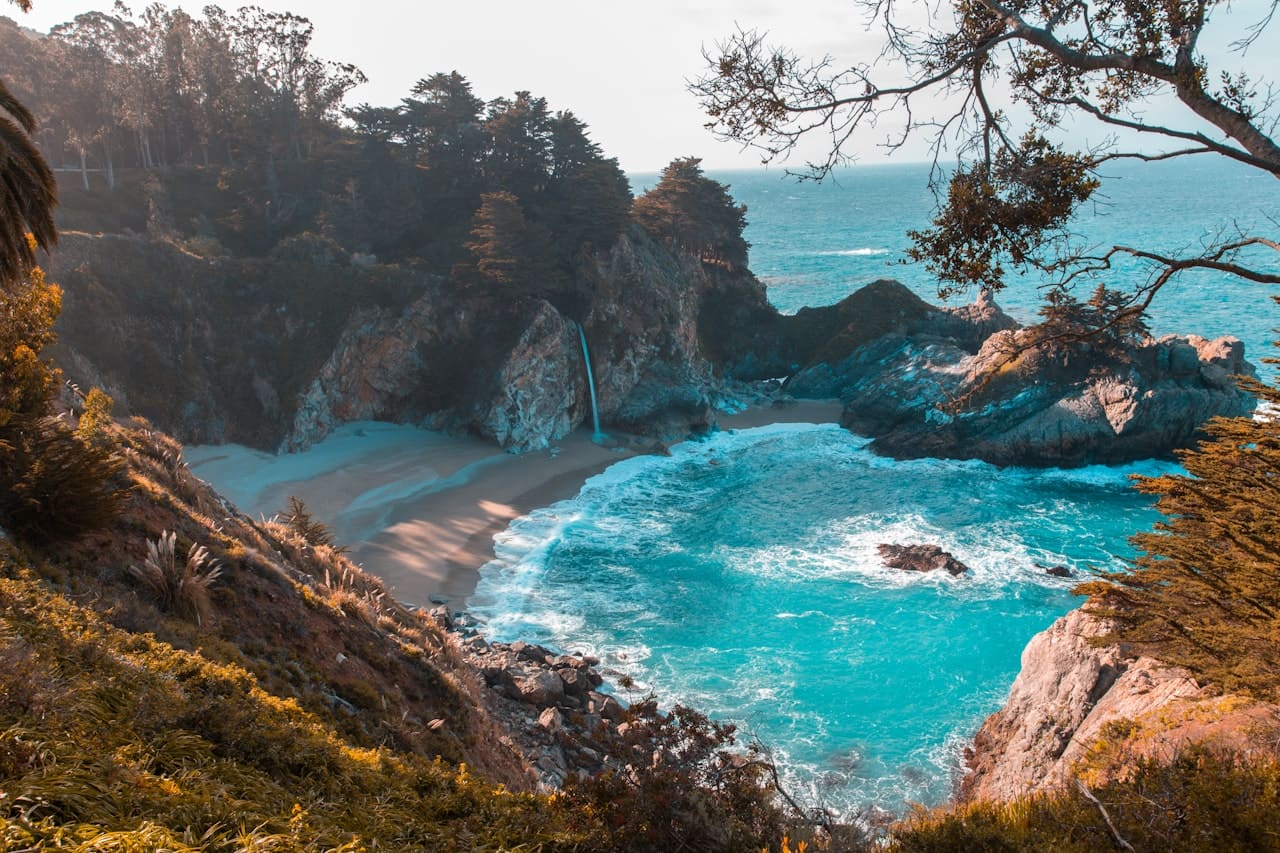
On good evenings the sky goes through seven colors. I am not speaking loosely. Above the lagoon on a clear evening in the dry season, the progression from gold to orange to pink to violet to blue-gray to deep blue to dark is distinct and measurable. I have watched it hundreds of times and I watch it every time.
Most people end up outside for this, wherever they’ve been during the day. Something about the sunset quality here produces a reliable collective pause. People set down whatever they’re doing and face west. This is not orchestrated. It happens because the thing happening in the sky is large enough to override whatever internal conversation was going on.
7:30pm — Evening optional
The evening session is offered but never required. Some nights it’s a short restorative practice — twenty, thirty minutes — specifically designed for sleep. Some nights it’s guided meditation. Some nights it’s a shared meal with conversation that runs long and follows its own shape.
On some evenings, nothing is scheduled and people gather around a fire near the lagoon edge. These are the evenings that show up most clearly in people’s memories of the retreat. Not because of anything I did, but because the combination of physical tiredness, fire, stars, and the sound of water produces conditions in which people say the things they actually mean.

9:30pm — Sleep
The body earns it here. I mean that in the most literal sense: by this hour, the body has done a full morning practice, walked the land, possibly surfed or swum, completed an afternoon session, and held still for a sunset. The sleep that follows is not the sleep of exhaustion — it’s the sleep of a body that has been genuinely used. There is a specific quality to waking from that kind of sleep that is different from the recovery sleep of stress fatigue. Most people notice it by the second or third night.
What changes over the course of a week
The first day is usually marked by low-grade resistance — the body arriving before the mind is ready, or the mind arriving with an agenda the body hasn’t agreed to. The disconnection from devices produces something that isn’t quite discomfort but is recognizable as adjustment.
By day three, something shifts. I’ve watched it often enough to expect it. The nervous system, which has been running a background process of maintaining connection with everything that isn’t here, gradually stops. Not because anything dramatic happens. Because nothing dramatic is available to happen. The environment is consistent, the schedule is consistent, and the only input is the practice, the food, the land, and the water.
By day five, people move differently. The quality of attention in the shala in the final days is not the same as it was on arrival. The layers of noise that were sitting on top of whatever they actually are have had enough time and quiet to settle.
What people say at the end that surprises me: not “I feel relaxed” — that’s expected. More often something like “I forgot what quiet felt like from the inside,” or “I didn’t realize how much energy I was spending just to manage all the noise.” These are not insights I’ve prompted. They’re what people report when they’ve had a week without the usual input.
Come and see
If you’re curious about what a retreat week here looks like from the outside — the space, the schedule, the hosting options — the YogaMala page has everything. And if you want to understand the place before committing to a week, the visit page is the honest place to start.