If you’re planning a trip to Chacahua between December and March, you’ve landed on what most people who know this coast would call the best time to be here. The Chacahua December through March dry season is the period when everything about this place clicks into place — the weather stabilizes, the lagoon fills with activity, the swell runs consistently, and the particular quality of light that makes coastal Oaxaca feel different from anywhere else becomes something you can count on day after day.
This is what we know from being here. We’re not pulling from a tourism brochure. This is what the land and water actually do.
The Weather
November through April is the dry season on this stretch of the Pacific coast. What that means in practice: low humidity, temperatures that settle between roughly 25 and 32 degrees Celsius most days, and reliable trade winds that arrive in the afternoon and cool things down before sunset. Rain is rare but not impossible — an occasional overnight shower can come through — but the long grey weeks of the wet season are gone.

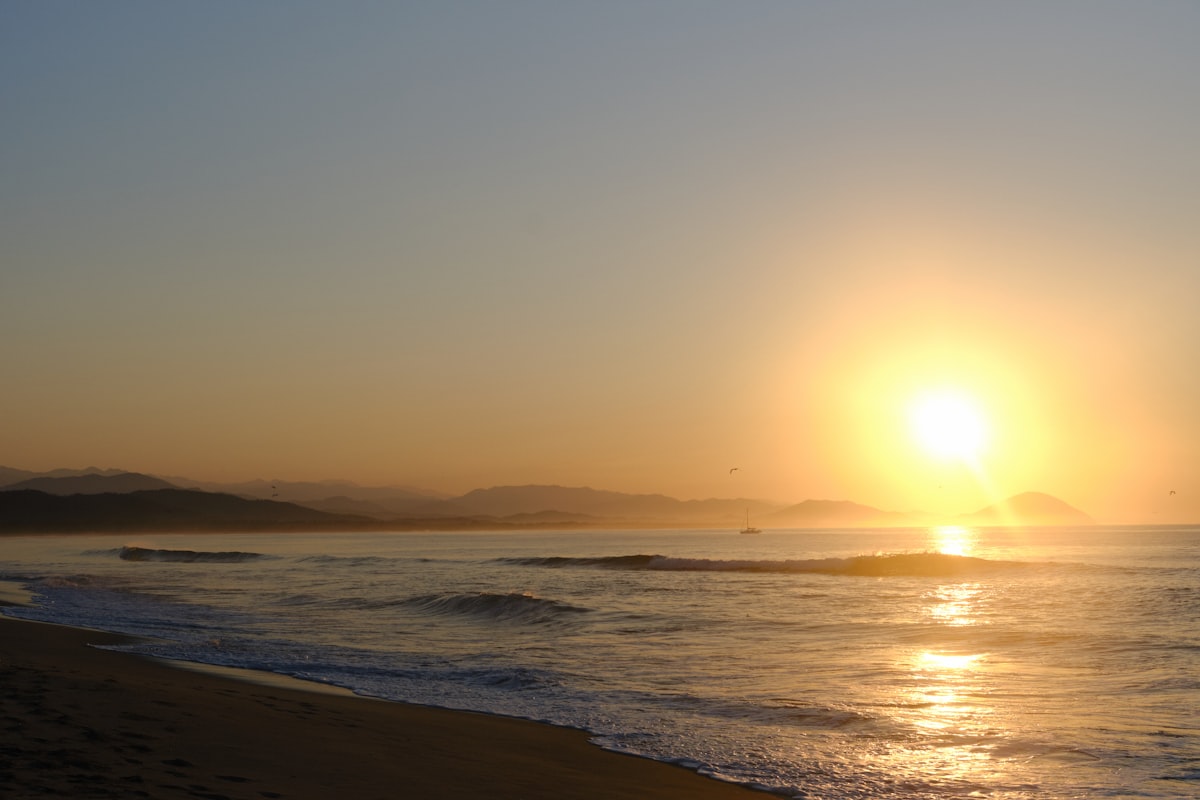
The mornings in this period have a particular quality. The air is clear in a way that the humidity of the wet season obscures. You can see further. The sky over the lagoon at dawn goes through colors that take a while to stop noticing.
The wind matters if you’re surfing — the trade winds that cool the afternoons also affect the surface conditions, so early mornings are generally the better window. But if you’re here for the land, the walks, the water, the afternoon wind is pleasant rather than disruptive.
The Lagoon in Dry Season
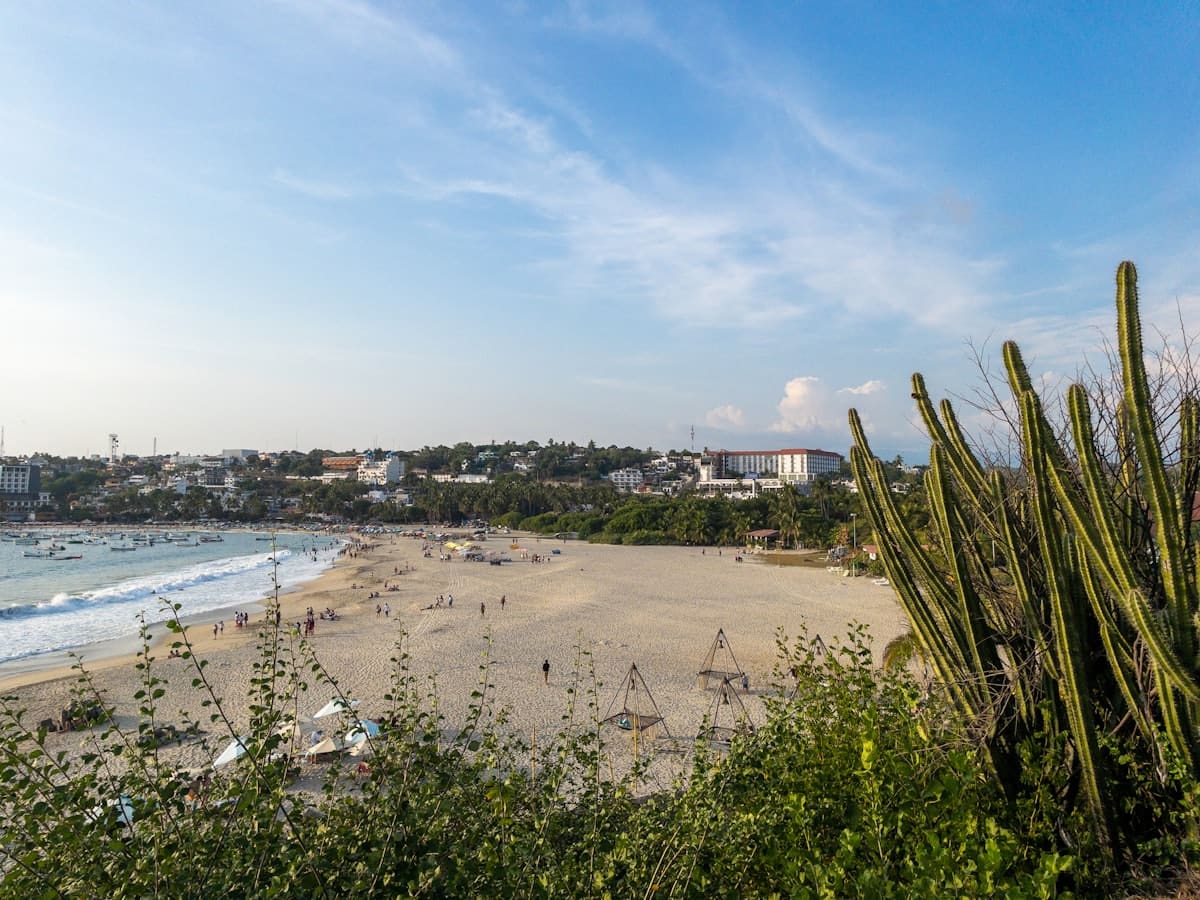
The Lagunas de Chacahua National Park is the defining feature of this coastline, and the dry season is when the lagoon is at its most active. The mangroves hold their shape year-round, but in the dry months the bird life intensifies. Pelicans are present in numbers that take some getting used to — they move in formations over the water and rest in groups on the lagoon’s edges. Herons work the shallower areas. Frigatebirds hang in the thermals above.
The fishing activity picks up. Local fishermen have their rhythms, and those rhythms are most visible in the dry months when the lagoon is calm enough for reliable work. If you spend time near Zapotalito, you’ll see the boats going out before sunrise and returning in the late morning.
This is a national park, which means a particular set of protections and a particular kind of interaction with the land. We think carefully about that at the Rancho — 70% of our 50 hectares is kept open, not developed, as a continuation of the park’s logic rather than a departure from it.
Sea Turtles
This is one of the things that surprises people who come during peak dry season. Olive ridley sea turtles nest on the beaches along this stretch of coast, with nesting activity peaking roughly between November and January. The beaches around the Chacahua lagoon system are active nesting areas.
Watching a turtle come ashore at night is not something that becomes ordinary. We’ve been here since 2023 and it still doesn’t feel routine. There are nesting protection efforts in the area, and the best way to encounter turtles responsibly is through the local guides who know the protocols.
If this is something you care about, December and January are the most reliable months to see nesting activity.
Surf Conditions
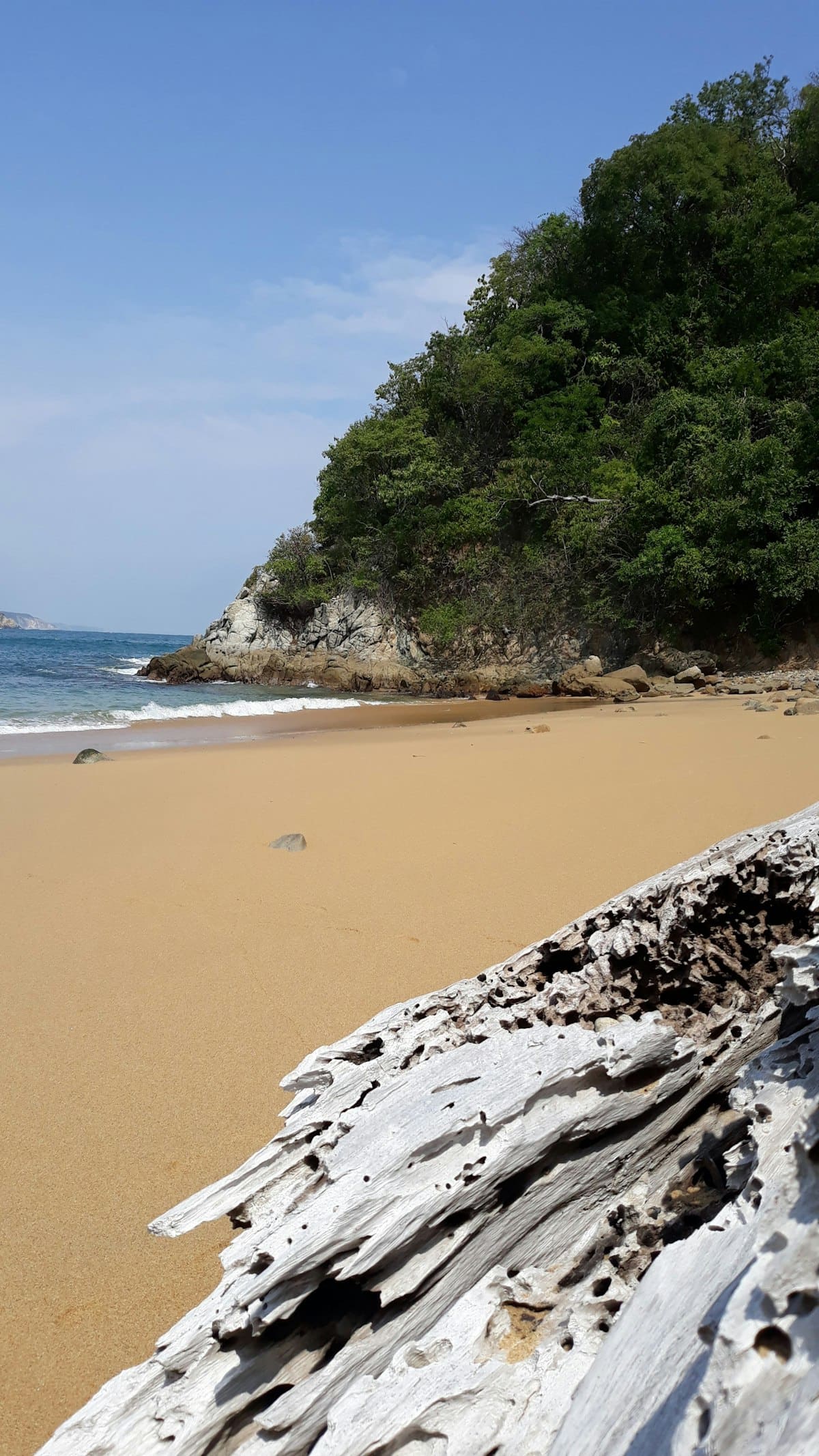
Playa Chacahua receives consistent Pacific swell throughout the dry season. The beach break here is accessible and works across a range of swell sizes, which makes it genuinely usable rather than a specialist destination that only functions in specific conditions.
Roxi Stolk runs surf and yoga programs from the Rancho, and the dry season is when those programs operate in their fullest form — the conditions are reliable enough to plan around, the weather makes outdoor practice comfortable, and the rhythm of early surf followed by movement practice on land fits naturally with how the days run here.
If you’re a beginner, this stretch of coast is a reasonable place to learn. If you’re an intermediate surfer looking for uncrowded waves, this is one of the least busy beaches of its quality anywhere on the Mexican Pacific.
What Living Here Looks Like in These Months
There’s a difference between visiting somewhere in high season and living there in high season, and it’s worth being honest about both.
For visitors: December through March is when the Rancho’s programs and facilities are most active. The weather is cooperative, the activities are running, and the community of people passing through is at its largest. If you want to understand what this place is and what it offers, this is the right window.
For people thinking about longer stays or about being part of what we’re building here: the high season gives you an accurate picture of the land and the ecosystem, but it doesn’t show you everything. The wet season has its own character — lush, green, quieter, sometimes powerfully present in ways the dry season isn’t. We’ve chosen to stay through both, and both have shaped how we think about the land.
The Nandia nature school, which operates on the Rancho, runs programming through the dry season when families and children can most easily make use of the land and lagoon. Boaz Agmon’s food forest is most productive in the months that follow the wet season’s growth, which means the dry season is when you’re harvesting and maintaining rather than planting. There’s a rhythm to all of it.
Visitor Volume
This is worth saying plainly: Chacahua is not crowded, even in high season. Compared to Puerto Escondido, which is 58 kilometers to the east and has a well-established international profile, or compared to the Huatulco resort corridor further east, the traffic here is modest. The beach at Playa Chacahua fills up on holiday weekends — Mexican families from the region, some international visitors — but the day-to-day pace remains unhurried.
That’s partly the geography (the boat crossing from Zapotalito creates a natural filter) and partly the lack of resort infrastructure. There are no large hotels here. There is no strip of tourist restaurants. What’s here is mostly what has always been here.
What to Bring and What to Expect
Sun protection is not optional. The UV index at this latitude in the dry season is genuinely high, and the reflection off the lagoon and beach compounds it. Bring more than you think you’ll need.
Cash is useful. The nearest ATMs are in Puerto Escondido, and while some things in the area can be paid by transfer, having pesos on hand makes daily life easier.
The colectivo from Puerto Escondido central market runs to Zapotalito with an irregular schedule, so if you’re arriving for the first time, arranging a transfer is a more reliable option. You can reach us at info@ranchodelasestrellas.com or +52 954 136 7919 to arrange a pickup. We’re about 50 minutes from the PXM airport by car.
If You’re Planning to Come
The dry season is when we have the most space for visitors and the clearest picture of what a stay here involves. If you’re thinking about it, the visit page is the right place to start — it covers what we offer, what to expect, and how to reach us. If you’re further along than a visit, and you’re thinking about whether this is somewhere you want to put down roots, the make it yours page is the conversation we’re ready to have.